What's new

Chess Match Thread

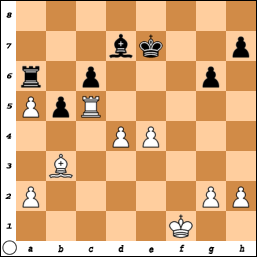
One Brow vs. babe


eah6rnkzdvx9.png


1. d4 d5
2. c4 dxc
3. Nc3 Nf6
4. Nf3 e6
5. Bg5 Be7
6. e3 Nd5
7. Bxe7 Qxe7
8. Bxc4 Qb4
9. Qb3 Qxb3
10. Bxb3 c6
11. 0-0 Nd7
12. Nxd4 exd
13. Rfc1 Nf6
14. Ba4 Bd7
15. b4 b5
16. Bb3 0-0
17. Ne5 Rfc1
18. Rc2 a5
19. bxa Bd8
20. Rac1 Ra6
21. f3 g6
22. Ng4 Kg2
23. Nxf6 Kxf6
24. Bxd5 Ke7
25. Rc5 f5
26. e4 Bd7
27. Bb3 fxe
28. fxe Rf8
29. Rf1 Rxf1
30. Kxf1

I have been expecting you to pick up one one pawn. I'm not sure how you see yourself getting the second.

One at a time?

Rxa5
 
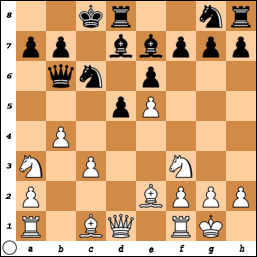
Enes CanTear You Apart;950620]


1. e4 e6
2. d4 d5
3. e5 c5
4. c3 Nc6
5. Nf3 Qb6
6. Be2 Be7
7. O-O Bd7
8. dxc5 Bxc5
9. b4 Be7
10. Na3 0-0-0

Thank you for fixing my notation.
 
  • Like
Reactions: ema
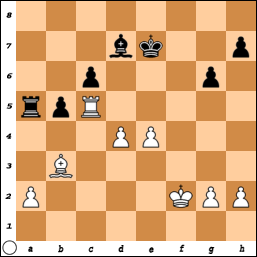
One Brow vs. babe


cdyqh493fuyx.png


1. d4 d5
2. c4 dxc
3. Nc3 Nf6
4. Nf3 e6
5. Bg5 Be7
6. e3 Nd5
7. Bxe7 Qxe7
8. Bxc4 Qb4
9. Qb3 Qxb3
10. Bxb3 c6
11. 0-0 Nd7
12. Nxd4 exd
13. Rfc1 Nf6
14. Ba4 Bd7
15. b4 b5
16. Bb3 0-0
17. Ne5 Rfc1
18. Rc2 a5
19. bxa Bd8
20. Rac1 Ra6
21. f3 g6
22. Ng4 Kg2
23. Nxf6 Kxf6
24. Bxd5 Ke7
25. Rc5 f5
26. e4 Bd7
27. Bb3 fxe
28. fxe Rf8
29. Rf1 Rxf1
30. Kxf1 Rxa5
31. Kf2

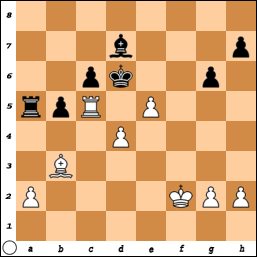
Well, I do hate the times where people take two pawns on a single move.
 
One Brow vs. babe


cdyqh493fuyx.png


1. d4 d5
2. c4 dxc
3. Nc3 Nf6
4. Nf3 e6
5. Bg5 Be7
6. e3 Nd5
7. Bxe7 Qxe7
8. Bxc4 Qb4
9. Qb3 Qxb3
10. Bxb3 c6
11. 0-0 Nd7
12. Nxd4 exd
13. Rfc1 Nf6
14. Ba4 Bd7
15. b4 b5
16. Bb3 0-0
17. Ne5 Rfc1
18. Rc2 a5
19. bxa Bd8
20. Rac1 Ra6
21. f3 g6
22. Ng4 Kg2
23. Nxf6 Kxf6
24. Bxd5 Ke7
25. Rc5 f5
26. e4 Bd7
27. Bb3 fxe
28. fxe Rf8
29. Rf1 Rxf1
30. Kxf1 Rxa5
31. Kf2

Well, I do hate the times where people take two pawns on a single move.

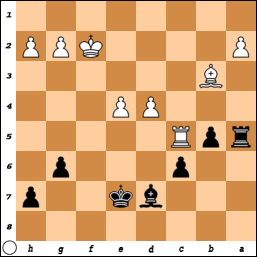
As you might have noted already, the "balance of power" in the battle zone was turned by the presence of my King. Bringing your King up might materially cure that, but it will take another move or two. Your Bishop/pawn duo in the corner projecting righting into the fight is still my biggest problem. That will cost me some moves. . . . .

edit 5:42 pm MST: So I've looked at a few different scenarios, and it seems I must now move my King, to the upcoming centerfield contest. . . .

Kd6
 
Last edited:
@OB

well, I think I have to stand in front of the advancing pawns which could become queens. I'm leaving the g and h pawns vulnerable to some extent, if you went after them with the bishop I could get at least one on a black square, and if I allow the other one to be taken, it would possibly be in trade for your a pawn. It's pretty tight on what can happen in the advance from the middle, there are plenty of mistakes I could make that would lose the game, but I think the best you can do reduces to an equal number of pawns and the difference in the game being the positions of the kings when the pawn advance in the center is spent.

In my experience playing my computer, the computer programs don't give sufficient consideration to King position or pawn position in the end game. . . .

So I'll be out on the ranch for a couple of days. . . .
 
One Brow vs. babe


dcuhisypqy8k.png


1. d4 d5
2. c4 dxc
3. Nc3 Nf6
4. Nf3 e6
5. Bg5 Be7
6. e3 Nd5
7. Bxe7 Qxe7
8. Bxc4 Qb4
9. Qb3 Qxb3
10. Bxb3 c6
11. 0-0 Nd7
12. Nxd4 exd
13. Rfc1 Nf6
14. Ba4 Bd7
15. b4 b5
16. Bb3 0-0
17. Ne5 Rfc1
18. Rc2 a5
19. bxa Bd8
20. Rac1 Ra6
21. f3 g6
22. Ng4 Kg2
23. Nxf6 Kxf6
24. Bxd5 Ke7
25. Rc5 f5
26. e4 Bd7
27. Bb3 fxe
28. fxe Rf8
29. Rf1 Rxf1
30. Kxf1 Rxa5
31. Kf2 Kd6
32. e5+

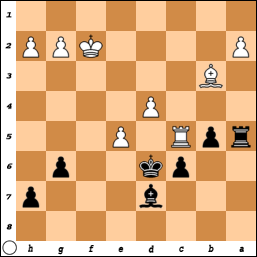
I think my bishop is too useful on the queen-side to go chasing after pawns on the king-side.

I'm curious where you think your king will be needed most.
 
One Brow vs. babe


dcuhisypqy8k.png


1. d4 d5
2. c4 dxc
3. Nc3 Nf6
4. Nf3 e6
5. Bg5 Be7
6. e3 Nd5
7. Bxe7 Qxe7
8. Bxc4 Qb4
9. Qb3 Qxb3
10. Bxb3 c6
11. 0-0 Nd7
12. Nxd4 exd
13. Rfc1 Nf6
14. Ba4 Bd7
15. b4 b5
16. Bb3 0-0
17. Ne5 Rfc1
18. Rc2 a5
19. bxa Bd8
20. Rac1 Ra6
21. f3 g6
22. Ng4 Kg2
23. Nxf6 Kxf6
24. Bxd5 Ke7
25. Rc5 f5
26. e4 Bd7
27. Bb3 fxe
28. fxe Rf8
29. Rf1 Rxf1
30. Kxf1 Rxa5
31. Kf2 Kd6
32. e5+

I think my bishop is too useful on the queen-side to go chasing after pawns on the king-side.

I'm curious where you think your king will be needed most.

I thought that was your best move.

I've gone over several game paths following from the two ways i can go with this, and as I recall the better way is to hold the center as much as possible. I'm two hours from home,plus whatever the wife and kids think my priorities should be. . . .lol . . .

I want to look at it again before I make the move.

I discovered a new computer chess app, my daughter downloaded it for me. It is awesome. It beats me so good, and quicker. I can play it even on the ranch because it resides right here on my mini iPad.

I finally beat it, and twice in a row.

I can see why Siro was saying the computers are getting better. It is still true though that familiarity breeds contempt, because after a while I know what it will do . . . .

I don't know what you will do. There are a lot of ways I've found which will lead to your victory in this game, and a few where I could win. Your Bishop stands in the way of all of them, so it will be my aim to force a trade on it. . . .

edit. . . . much much later. . . .

well, math wins all the time. When you have just two choices each step of the way, there are a thousand different outcomes just ten steps down the road. . . . a million possibilities just twenty moves down the road.. . . . I can't possibly work through all of them, though a computer can. . . . in milliseconds. . . . . Siro wins I suppose in his argument with me about computers being better at chess than humans. However, humans are superior because they can make a decision simply because they love it, or something.

both possible moves lead to a standoff on the goal line, and the pawns can be stopped, but who knows, OB might see a way to force his way in, or I might miss a chance to stop him.

All in all, I can see why Siro, Jonah,and Enes have gone off to play lightning rounds of chess on another site that they can do that on. . . . very easily.
 
Last edited:
One Brow vs. babe


dcuhisypqy8k.png


1. d4 d5
2. c4 dxc
3. Nc3 Nf6
4. Nf3 e6
5. Bg5 Be7
6. e3 Nd5
7. Bxe7 Qxe7
8. Bxc4 Qb4
9. Qb3 Qxb3
10. Bxb3 c6
11. 0-0 Nd7
12. Nxd4 exd
13. Rfc1 Nf6
14. Ba4 Bd7
15. b4 b5
16. Bb3 0-0
17. Ne5 Rfc1
18. Rc2 a5
19. bxa Bd8
20. Rac1 Ra6
21. f3 g6
22. Ng4 Kg2
23. Nxf6 Kxf6
24. Bxd5 Ke7
25. Rc5 f5
26. e4 Bd7
27. Bb3 fxe
28. fxe Rf8
29. Rf1 Rxf1
30. Kxf1 Rxa5
31. Kf2 Kd6
32. e5+

I think my bishop is too useful on the queen-side to go chasing after pawns on the king-side.

I'm curious where you think your king will be needed most.

Ke7
 
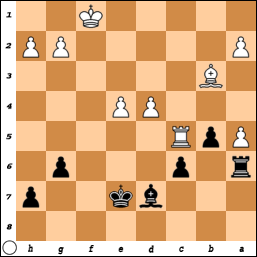
While the other move, to the spot behind my pawn, is appealing too, and would lead to my King eventually moving back in front of the advancing pawns. . . . . the move I chose it preferable precisely because it leads to action before OB's King can be gotten into position to materially turn the balance of power.

Two advancing pawns with a King behind them can't be stopped. This way I can't be stopped from executing some moves that will almost surely lead to my victory. In my opinion, this is a demonstration of the effectiveness of the King in an attack sequence.

A lot of players want to secure their King in a corner of the board and then go on a marauding expedition. Almost all very good players can mount an attack on any defense precisely because of the ineffectiveness of an attack while significant power is "out of play".
 
I thought that was your best move.

I've gone over several game paths following from the two ways i can go with this, and as I recall the better way is to hold the center as much as possible. I'm two hours from home,plus whatever the wife and kids think my priorities should be. . . .lol . . .

I want to look at it again before I make the move.

I discovered a new computer chess app, my daughter downloaded it for me. It is awesome. It beats me so good, and quicker. I can play it even on the ranch because it resides right here on my mini iPad.

I finally beat it, and twice in a row.

I can see why Siro was saying the computers are getting better. It is still true though that familiarity breeds contempt, because after a while I know what it will do . . . .

I don't know what you will do. There are a lot of ways I've found which will lead to your victory in this game, and a few where I could win. Your Bishop stands in the way of all of them, so it will be my aim to force a trade on it. . . .

edit. . . . much much later. . . .

well, math wins all the time. When you have just two choices each step of the way, there are a thousand different outcomes just ten steps down the road. . . . a million possibilities just twenty moves down the road.. . . . I can't possibly work through all of them, though a computer can. . . . in milliseconds. . . . . Siro wins I suppose in his argument with me about computers being better at chess than humans. However, humans are superior because they can make a decision simply because they love it, or something.

both possible moves lead to a standoff on the goal line, and the pawns can be stopped, but who knows, OB might see a way to force his way in, or I might miss a chance to stop him.

All in all, I can see why Siro, Jonah,and Enes have gone off to play lightning rounds of chess on another site that they can do that on. . . . very easily.

Download a program that's actually supposed to beat humans, as opposed to a phone app. For example, try Deep Fritz. My challenge still stands; if you beat a top computer program even once, I'll give you $500. You have the rest of your life to try. :)
 
Download a program that's actually supposed to beat humans, as opposed to a phone app. For example, try Deep Fritz. My challenge still stands; if you beat a top computer program even once, I'll give you $500. You have the rest of your life to try. :)

That's a respectable offer. How will I prove it to you if I do?

So here's the argument about a universe that is essentially infinite as opposed to the concept about a universe that is finite. What is the best approach to take in understanding what's out there, to start out with a few facts and some limited tools of logic, or look for a theory of everything. . . . in either case we poor humans will need to be moving our discussion along past some things we used to believe. . . .

A chess game is probably not an infinite universe, and all the possibilities could probably be numbered and stored in a data center somewhere, and we could just have fun announcing our choice of known outcomes I suppose.
But humans do have a choice every step of the way. Do we have an actual mathematical result specifying the total number of possible games that could be played out?

In a game like a coin toss with two outcomes possible for each "move", a sequence of ten moves will generate up to 1024 specific results, twenty moves will generate more than a million. A chess game of fewer than twenty moves is probable only if there is an unequal skill match. For folks like me and OB, we could probably average thirty moves each in our games. Really good players know how to achieve the mate efficiently. . . . but given all the matches ever done, with millions of humans versus humans, or computers, I think we have probably logged ten to twenty billion different or unique "games", out of . . . . . including those with absolutely no reason for moves. . . . . maybe a hundred billion.

Two super computers using the very best programs would conceivably play only one game, and keep playing it over and over again, and it would always be won by white.

So tell you what, I'll watch that game a few times, study it out, and determine what the basis for each move is in some programming hierarchy, and analyze that set of concepts, and see if I can figure out a way to "trick" it in a way that will give me a chance to win.

I have a cousin who, it is rumored, studied math, and became a notorious card counter who could beat the casino all too frequently. On the other hand, I have a sister in law, a Chinese cultural product though she is an American citizen now, who loves to gamble. She walks into the casino with some kind of mystical aura or feeling, and unconsciously goes around winning at everything. My brother used to think it was going to be the ruin of his budget and his finances. . . . . a statistical oddity perhaps, bound eventually to prove the odds do rule. Well, I can't prove she really wins at the casino, because she earns a lot of money and nobody really knows.

I do know that in chess there are times when an unorthodox player can invite in a perfectly logical attack sequence and draw the opponent out to some vulnerability to counterattack. This means that any computer program can be beat as well. There is no "perfect game" nor any "perfect chess program". This is my statement that even a simple chess board is in fact an infinite universe.

Like I said before, I have a business and I can hardly afford to spend a day on $500, and my wife has some expectations that are just. But as a game, I will enjoy playing chess because of its value in teaching logic and consequences of choice, and planning. My girls are not really all that interested in it, as somehow they have other interests in life.

I will accept the possibility that you are ultimately going to be vindicated, but I think you will see some better chess programs developed that can beat your "Deep Fritz" as well, which is tantamount to my claim that a human can do it. . . . hey we write those programs, don't we?

For me, this is the most fun I know of. . . . . chess takes second seat only to philosophical meanderings through the universe of possible universes. . . .
 
That's a respectable offer. How will I prove it to you if I do?

So here's the argument about a universe that is essentially infinite as opposed to the concept about a universe that is finite. What is the best approach to take in understanding what's out there, to start out with a few facts and some limited tools of logic, or look for a theory of everything. . . . in either case we poor humans will need to be moving our discussion along past some things we used to believe. . . .

A chess game is probably not an infinite universe, and all the possibilities could probably be numbered and stored in a data center somewhere, and we could just have fun announcing our choice of known outcomes I suppose.
But humans do have a choice every step of the way. Do we have an actual mathematical result specifying the total number of possible games that could be played out?

In a game like a coin toss with two outcomes possible for each "move", a sequence of ten moves will generate up to 1024 specific results, twenty moves will generate more than a million. A chess game of fewer than twenty moves is probable only if there is an unequal skill match. For folks like me and OB, we could probably average thirty moves each in our games. Really good players know how to achieve the mate efficiently. . . . but given all the matches ever done, with millions of humans versus humans, or computers, I think we have probably logged ten to twenty billion different or unique "games", out of . . . . . including those with absolutely no reason for moves. . . . . maybe a hundred billion.

Two super computers using the very best programs would conceivably play only one game, and keep playing it over and over again, and it would always be won by white.

So tell you what, I'll watch that game a few times, study it out, and determine what the basis for each move is in some programming hierarchy, and analyze that set of concepts, and see if I can figure out a way to "trick" it in a way that will give me a chance to win.

I have a cousin who, it is rumored, studied math, and became a notorious card counter who could beat the casino all too frequently. On the other hand, I have a sister in law, a Chinese cultural product though she is an American citizen now, who loves to gamble. She walks into the casino with some kind of mystical aura or feeling, and unconsciously goes around winning at everything. My brother used to think it was going to be the ruin of his budget and his finances. . . . . a statistical oddity perhaps, bound eventually to prove the odds do rule. Well, I can't prove she really wins at the casino, because she earns a lot of money and nobody really knows.

I do know that in chess there are times when an unorthodox player can invite in a perfectly logical attack sequence and draw the opponent out to some vulnerability to counterattack. This means that any computer program can be beat as well. There is no "perfect game" nor any "perfect chess program". This is my statement that even a simple chess board is in fact an infinite universe.

Like I said before, I have a business and I can hardly afford to spend a day on $500, and my wife has some expectations that are just. But as a game, I will enjoy playing chess because of its value in teaching logic and consequences of choice, and planning. My girls are not really all that interested in it, as somehow they have other interests in life.

I will accept the possibility that you are ultimately going to be vindicated, but I think you will see some better chess programs developed that can beat your "Deep Fritz" as well, which is tantamount to my claim that a human can do it. . . . hey we write those programs, don't we?

For me, this is the most fun I know of. . . . . chess takes second seat only to philosophical meanderings through the universe of possible universes. . . .

I'd have to take your word for it. Just let me know if you ever beat a world-class program at full strength, and you'll have your money.

Technology is advancing at such a staggering rate, and I'm curious as to how the "human intelligence cannot be replicated" crowd will react as they see computers surpassing human cognitive ability in more and more areas. It is also quite possible you'll live long enough to see computers that cannot be distinguished from humans through conversation. And I'm not talking about programming trickery, like cramming in millions of different answers to most conceivable situations. I am talking about a machine that is capable of formulating responses based on its knowledge and experience independent of any programmed response, and purely based on creative application of its knowledge and experience (like a human). If such a thing comes to pass, would you consider it intelligent? Is there any threshold of intelligence that you'd accept to recognize man-made machines as sentient entities much like humans? Or do you have philosophical/religious reasons to reject that notion regardless of how intelligent a machine appears to be?
 
Back
Top