What's new

Nazis doing Nazi things

  • Thread starter Thread starter Deleted member 365
  • Start date Start date

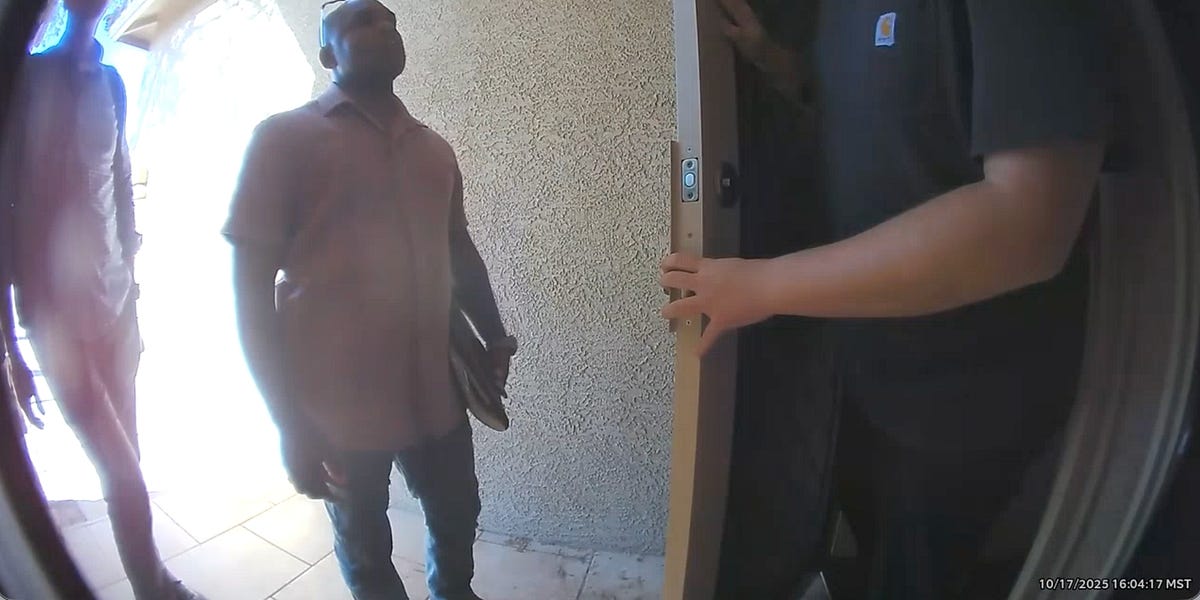
Democrats in the House and Senate announced plans for a wide-ranging investigation into immigration agents’ detention of citizens after a ProPublica story found that more than 170 Americans have been held by immigration officials this year.

Minority leaders of the House Oversight and Government Reform Committee and the Senate’s Permanent Subcommittee on Investigations said the joint investigation into the detention of U.S. citizens and other allegations of misconduct by immigration agents would include a hearing in Los Angeles.

“Over 170 U.S. Citizens are being arrested. Why? Because they look like me. Because they are of Latino origin. Or because they are suspected to not be a U.S. citizen, or because they are suspected of crimes they have not committed,” Rep. Robert Garcia of California, the ranking Democrat on the House committee, said during a Monday press conference in Los Angeles with Mayor Karen Bass.

Garcia said the investigators are demanding all records and documents showing how U.S. citizens are treated by immigration officials in Los Angeles and around the country. “We want to understand what they are doing in our neighborhoods, how it is being funded,” he said.

Our investigation found that at least 50 citizens have been detained based on questions about their citizenship as of Oct. 5. They were almost all Latino. Roughly 130 others have been detained after raids or protests on allegations of assaulting officers or interfering with arrests. Many of those cases have wilted under scrutiny.

We found Americans have been dragged, tackled, beaten, tased and shot by immigration agents. At least two dozen citizens have reported being held for at least a day without access to a phone or a lawyer.

Bass and Garcia said the mistreatment of citizens has come amid the arrests of immigrants reporting for check-ins and immigration court, and the administration’s repeated blocking of congressional attempts to visit and conduct oversight in federal detention facilities like the one in Los Angeles.

“It’s important that we say today that what is happening to undocumented residents is also happening to U.S. citizens, which means this can happen to anyone, to all of us, at any period of time,” Bass said.
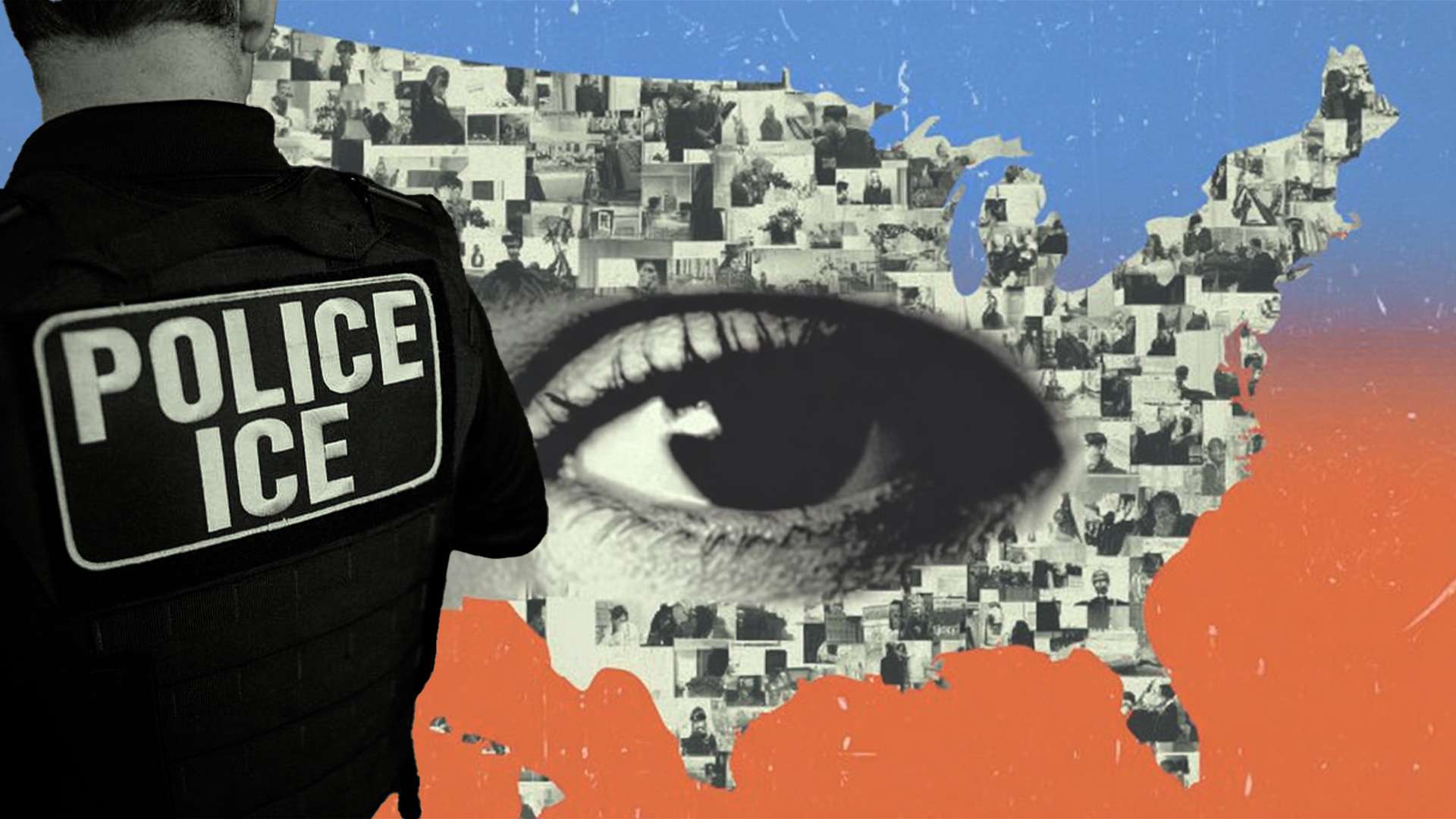
 
Big Brother is watching all of us.


While a federal judge scrutinizes the constitutionality of tactics used by federal immigration authorities during ongoing protests in Chicago, these same agencies are quietly amassing behind-the-scenes surveillance technology. Originally slated to target undocumented immigrants, the technology is now being used to investigate protesters of President Donald Trump's mass deportation campaign.

Backed by funding from the One Big Beautiful Bill Act passed in July, Immigration and Customs Enforcement (ICE) has entered into contracts with companies to provide surveillance capabilities like facial recognitionalgorithms, an iris-scanning identification app, controversial spyware on smartphones, and a real-time smartphone location and social media tracking system. In September alone, ICE racked up $1.4 billion in new surveillance technology contracts, the highest in at least 18 years, according to The Washington Post.

These contracts are in addition to any privately owned surveillance networks to which ICE has access. Flock Safety, for example, has allowed ICE to access over 80,000 of its AI-powered license plate reader cameras installed nationwide, according to 404 Media. The expansive—and growing—mass surveillance camera network captures the license plate number, make, model, and any distinctive features of all passing vehicles, making it possible to track cars and, by extension, drivers, often without a warrant.

Although ICE has sold its surveillance campaign as necessary to locating and deporting undocumented immigrations, the Trump administration has signaled that the technologies will also be used on American citizens. In September, Trump signed an executive order designating antifa a domestic terrorist organization and signaled that federal agencies, including ICE, should devote resources to investigating the network. Todd M. Lyons, acting director of ICE, told Glenn Beck during an interview shortly after the executive order was signed that the agency would "track the money," "ringleaders," and "professional agitators" who are "being brought in" from outside the Chicago area to protest against immigration enforcement. But whether from Chicago or elsewhere, protester or "domestic terrorist," constitutional rights and limitations still apply, although adherence by federal agencies is being questioned.

Critics of mass surveillance have long warned that intrusive technologies could be used to violate Americans' privacy rights. "We don't know if law enforcement or ICE are getting search warrants to deploy this spyware," Maria Villegas Bravo, counsel for the Electronic Privacy Information Center, told the Post. "It's also a First Amendment issue because your phone contains all your communications, all your expressions…it has your contact lists, it has your social media. Any political organizing people do," she continued, is "typically on social media now, or over the phone."

The expansion of tracking and surveillance technology deployed by ICE coincides with the Trump administration's crackdown on services used by the public to share information about federal immigration enforcement. Since early October, the Justice Department has successfully pressured social media platforms, including Meta, Apple, and Google, to remove online groups and apps that share where ICE and other immigration agents have been sighted. Although private companies are not governed by the First Amendment and are free to set their own rules about acceptable speech, it is extremely concerning that the federal government would use its power and influence to blatantly interfere with Americans' otherwise protected free speech.

The courts and public are right to worry about the constitutional violations taking place in plain view by immigration agents during protests and enforcement operations, and officers must be held accountable. But those same actors must also be held responsible for the privacy violations that are less obvious and happening behind the scenes.

 
You won't hear this on the news, but Hitler makes another peace deal. This is a big deal along with ongoing China talks. If you are invested in stocks you would notice the stocks are rallying today.

I've mentioned this before, but paying attention to investment news has been a good barometer of how full of **** the news media is.


View: https://x.com/RapidResponse47/status/1982337322713506279

You sound passionate about this subject.

What specifically did Trump do to accomplish this major achievement?
 
You won't hear this on the news, but Hitler makes another peace deal.
Ah, yes, your peace president.


You sound passionate about this subject.

What specifically did Trump do to accomplish this major achievement?
lol unlike Biden he was able to leave the basement and have conversations without drooling on his shoes and ******** his pants

President Donald Trump played a central role in brokering and overseeing the Kuala Lumpur Peace Accords, a historic agreement signed on October 26, 2025, between Thailand and Cambodia to end longstanding border tensions and hostilities. The accords, formally a joint declaration, built on a ceasefire Trump helped negotiate earlier that year following deadly clashes in July 2025 that killed over 40 people and displaced around 300,000.

thediplomat.com
Key Aspects of Trump's Involvement:
  • Initial Intervention and Ceasefire: In July 2025, while on a trip to Scotland, Trump personally called the leaders of Thailand (Prime Minister Anutin Charnvirakul) and Cambodia (Prime Minister Hun Manet), threatening to impose tariffs on both countries if they did not halt the fighting. This pressure, combined with mediation efforts by Malaysian Prime Minister Anwar Ibrahim, led to an immediate ceasefire on July 28.

    npr.org +1
  • Hosting and Signing Ceremony: During the 47th Association of Southeast Asian Nations (ASEAN) summit in Kuala Lumpur, Trump co-hosted the signing ceremony with Anwar Ibrahim. He presided over the event as Thailand and Cambodia formalized the accords, which included commitments to cease all hostilities, release detained soldiers (e.g., 18 Cambodian troops held by Thailand), and establish building blocks for lasting peace.

    whitehouse.gov +2
    Trump emphasized his role in speeches, calling it a "monumental step" for Southeast Asia that could "save millions of lives" and describing peace deals as "almost a hobby."

    bbc.com +1
  • Broader Diplomatic Context: Trump's participation was tied to his Asia tour, where he also secured trade deals with Malaysia, Cambodia, Thailand, and Vietnam. The accords elevated U.S. relations in the region and earned Trump a Nobel Peace Prize nomination from Cambodia.

    whitehouse.gov +2
    Critics noted the agreement's focus on optics for Trump's "peacemaking" image, though it marked progress toward de-escalation despite unresolved underlying disputes.

    thediplomat.com +1
The accords do not fully resolve the border dispute but represent a significant diplomatic win facilitated by Trump's direct engagement
 
lol unlike Biden he was able to leave the basement and have conversations without drooling on his shoes and ******** his pants

President Donald Trump played a central role in brokering and overseeing the Kuala Lumpur Peace Accords, a historic agreement signed on October 26, 2025, between Thailand and Cambodia to end longstanding border tensions and hostilities. The accords, formally a joint declaration, built on a ceasefire Trump helped negotiate earlier that year following deadly clashes in July 2025 that killed over 40 people and displaced around 300,000.

thediplomat.com
Key Aspects of Trump's Involvement:
  • Initial Intervention and Ceasefire: In July 2025, while on a trip to Scotland, Trump personally called the leaders of Thailand (Prime Minister Anutin Charnvirakul) and Cambodia (Prime Minister Hun Manet), threatening to impose tariffs on both countries if they did not halt the fighting. This pressure, combined with mediation efforts by Malaysian Prime Minister Anwar Ibrahim, led to an immediate ceasefire on July 28.

    npr.org +1
  • Hosting and Signing Ceremony: During the 47th Association of Southeast Asian Nations (ASEAN) summit in Kuala Lumpur, Trump co-hosted the signing ceremony with Anwar Ibrahim. He presided over the event as Thailand and Cambodia formalized the accords, which included commitments to cease all hostilities, release detained soldiers (e.g., 18 Cambodian troops held by Thailand), and establish building blocks for lasting peace.

    whitehouse.gov +2
    Trump emphasized his role in speeches, calling it a "monumental step" for Southeast Asia that could "save millions of lives" and describing peace deals as "almost a hobby."

    bbc.com +1
  • Broader Diplomatic Context: Trump's participation was tied to his Asia tour, where he also secured trade deals with Malaysia, Cambodia, Thailand, and Vietnam. The accords elevated U.S. relations in the region and earned Trump a Nobel Peace Prize nomination from Cambodia.

    whitehouse.gov +2
    Critics noted the agreement's focus on optics for Trump's "peacemaking" image, though it marked progress toward de-escalation despite unresolved underlying disputes.

    thediplomat.com +1
The accords do not fully resolve the border dispute but represent a significant diplomatic win facilitated by Trump's direct engagement
Credit given to you for this post and to Trump for this accomplishment.
 
Back
Top