What's new

Sound in Utah today?!

  • Thread starter Thread starter Deleted member 365
  • Start date Start date
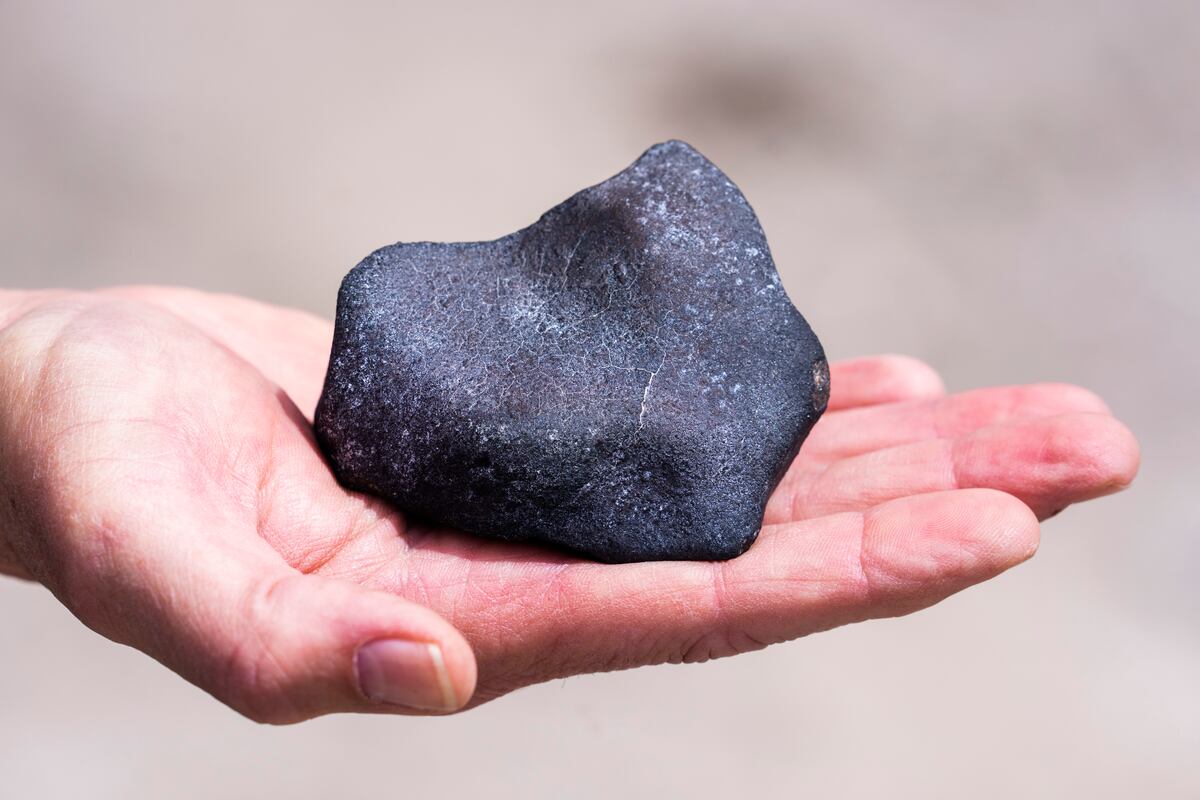
So, an experienced meteorite hunter has found the first piece, so pieces did reach the ground. One proposed name(the nomenclature committee of the Meteoritical Society assigns official names) is “Great Salt Lake”. The reddish-brown staining seen on the cut and polished face looks like oxidation, which is puzzling. Found 3 days after the fall, weathering shouldn’t be that rapid. But, regardless, beautiful fresh black fusion crust. There’s more out there!


View: https://m.youtube.com/watch?v=GoXoAhdjZo0
 
So, an experienced meteorite hunter has found the first piece, so pieces did reach the ground. One proposed name(the nomenclature committee of the Meteoritical Society assigns official names) is “Great Salt Lake”. The reddish-brown staining seen on the cut and polished face looks like oxidation, which is puzzling. Found 3 days after the fall, weathering shouldn’t be that rapid. But, regardless, beautiful fresh black fusion crust. There’s more out there!


View: https://m.youtube.com/watch?v=GoXoAhdjZo0

Given the weathering how do they know it wasn't from an earlier meteorite?
 
Given the weathering how do they know it wasn't from an earlier meteorite?
That was my first thought. But, the fusion crust is exceptionally fresh, indicating a very recent fall. I also wondered if I was not seeing oxidation, but something just resembling the oxidation I am used to seeing on slices. I guess if there had been heavy rains, since the fall, and before recovery, one might see oxidation spots on interior surfaces that are not crusted, or in slices. In any case, with crust so fresh, it’s likely a very recent fall, and assuming the hunter had the flight path figured out, and was looking in the area where one would expect the strewn field from that path, it likely is from that witnessed fall. There are also tests that will tell you the “terrestrial age”, the length of time it has been on Earth, but it’s likely from that fireball, the hunter is experienced.
 
The hunter said on the news last night that he is not yet giving up the information of exactly where he found it. Still wants to find other pieces himself, I guess.
 
  • Like
Reactions: Red
The hunter said on the news last night that he is not yet giving up the information of exactly where he found it. Still wants to find other pieces himself, I guess.
I just realized he is a real well known meteorite hunter. I’m surprised if he doesn’t have more company out there by now. It’s a very competitive hobby….
 

It’s a race,” he said. “... Very few guys are telling each other any secret information, that’s for sure. They’re all out there trying to find a piece.”

So far, the results of the competition have come in quickly, and pieces of the meteorite are being found at a startling pace. “The takeaway message here is that this is an amazingly rare event,” Karner said, “because we recovered the rock just three days after it came to Earth.”

The fall over Salt Lake City was unique for a number of reasons, Dayton explained. The first rarity was the meteor flew over a major urban area like Utah’s capital, meaning there were numerous eye witnesses and even video recordings of the fiery ball shooting across the sky. It also happened during the daytime, so witnesses had a much better idea of where the meteor was headed.

First-hand accounts are important, since they give hunters the data needed to postulate a meteor’s trajectory.


Once they have the trajectory and approximate time of the fall, scientists and hunters use Doppler radar data, which is generally used to track precipitation, to make informed guesses about where chunks of the space rock landed.

Dayton said the scientific community has a particular interest in this sort of data, and during this hunt, they made it available to the public.

“They can see not only precipitation, water droplets with radar, but they can also see flocks of birds and airplanes, and they can see rocks falling from the sky,” he said. “And we’re able to slice through time, through milliseconds, and watch those rocks move. And we can kind of predict a path.”

And then the race is on.

“Basically, at that point, it’s a treasure map, right?” he said. “Because X marks the spot.”


Or spots. The hunt isn’t over, and it’s possible many more pieces of meteorite are strewn around the Great Salt Lake, still to be discovered.

Based on the number of calls he’s been receiving, Dayton thinks word will start spreading soon, and increasing numbers of people will join the hunt.
 
Back
Top