Red
Well-Known Member
And how about Dr. Casey Means as US Surgeon General? Hard to come up with another society in history launching an attack on human knowledge like this. Throughout Western history, prior to the scientific revolution, there were indeed many questionable and ill advised medical treatments promoted. And used. But this is not such inadvertent, but well meaning, ignorance. This is just one of the stupidest movements in history: destroy everything we’ve learned and let’s wing it with quacks….

 www.cspinet.org
Statement of CSPI President Dr. Peter G. Lurie
The job of Surgeon General of the United States is not an entry-level position.
The position is traditionally occupied by a practicing, licensed physician with considerable clinical or public health experience. On paper, Dr. Casey Means lacks this key credential.
Even if she were qualified on paper, Means has taken some breathtakingly misinformed positions on matters of public health, including on birth control pills, raw milk, and the causes of autism. Considered alongside the supplement pitching and the conspiratorial thinking and unscientific mysticism on her blog, this is all disqualifying.
The question is whether Senators have learned anything from the Robert F. Kennedy, Jr., confirmation debacle. He provided enough reassurance on vaccines to convince some to vote for him – and now he has set about undermining public confidence in vaccines and the process by which they’re approved. Let’s not make that mistake again.
 www.theatlantic.com
Robert F. Kennedy Jr.’s warning about mitochondria slipped in between the anti-vaccine junk science and the excoriation of pharmaceutical drugs as “the No. 3 killer in our country.” He was speaking in 2023 to Joe Rogan, elaborating on the dangers of Wi-Fi—which no high-quality scientific evidence has shown to harm anyone’s health—and arguing that it causes disease by somehow opening the blood-brain barrier, and by degrading victims’ mitochondria.
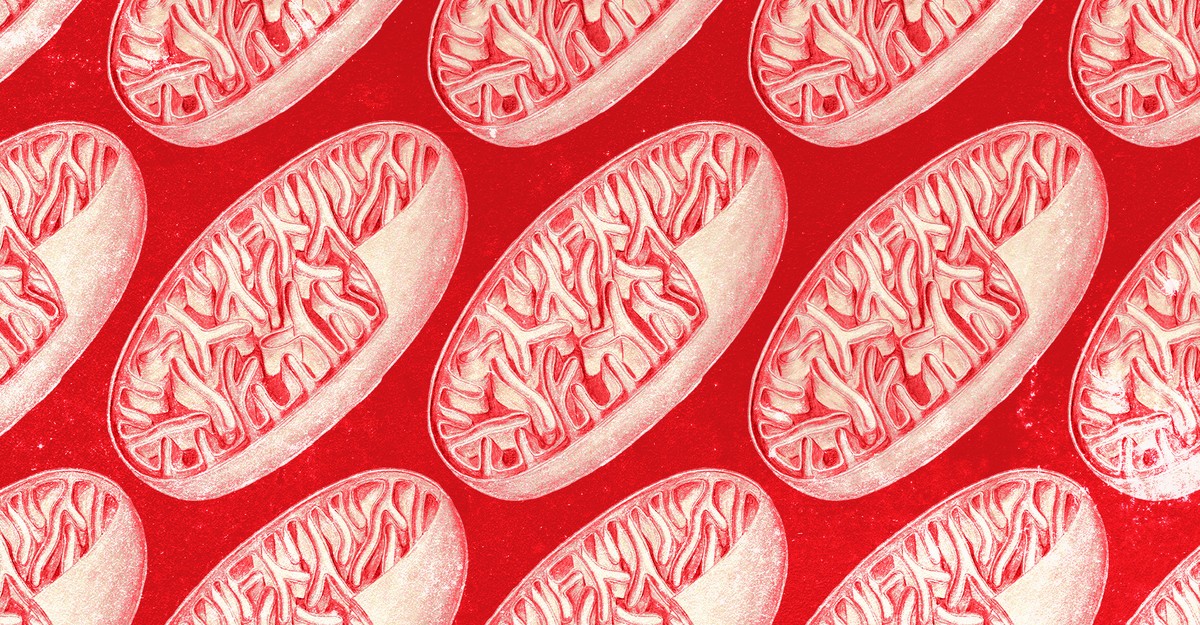
The mention of mitochondria—the tiny structures that generate energy within our cells—was brief. Two years later, mitochondrial health is poised to become a pillar of the MAHA movement, already showing up in marketing for supplements and on podcasts across the “manosphere.” Casey Means, President Donald Trump’s newest nominee for surgeon general, has singled out the organelle as the main casualty of the modern American health crisis. According to Means (who has an M.D. but no active medical license), most of America’s chronic ailments can be traced to mitochondrial dysfunction. Should she be confirmed to the post of surgeon general, the American public can expect to hear a lot more about mitochondria.
Among scientists, interest and investment in mitochondria have risen notably in the past five years, Kay Macleod, a University of Chicago researcher who studies mitochondria’s role in cancer, told me. Mitochondria, after all, perform a variety of crucial functions in the human body. Beyond powering cells, they can affect gene expression, help certain enzymes function, and modulate cell death, Macleod said.
When mitochondria are defective, people do indeed suffer. Vamsi Mootha, a mitochondrial biologist based at Massachusetts General Hospital and the Broad Institute, told me that rare genetic defects (appearing in about one in 4,300 people) can cause the organelles to malfunction, leading to muscle weakness, heart abnormalities, cognitive disability, and liver and kidney problems. Evidence also suggests that defects in mitochondria directly contribute to symptoms of Parkinson’s disease, and could be both a cause and an effect of type 2 diabetes. Other conditions’ links to mitochondria are blurrier. Researchers see aberrant mitochondria in postmortem biopsies of patients with illnesses such as Alzheimer’s, cancer, and fatty-liver disease, Mootha said; whether those damaged mitochondria cause or result from such conditions is not yet clear.
But according to Good Energy, the book Means published last year with a top MAHA adviser—her brother, Calley—mitochondrial dysfunction is a veritable plague upon the United States, responsible for both serious illness and everyday malaise. In their view, modern Western diets and lifestyles wreck countless Americans’ metabolic health: Every time you drink unfiltered water or a soda, or feel the stress of mounting phone notifications, you hurt your mitochondria, they say, triggering an immune response that in turn triggers inflammation. (Damaged mitochondria really can cause inflammation, Macleod said.) This chain of events, the Meanses claim, can be blamed for virtually every common chronic health condition: migraines, depression, infertility, heart disease, obesity, cancer, and more. (Casey Means did not respond to requests for comment; reached by email, Calley did not respond to my questions about mitochondria, but noted, “There is significant scientific evidence that healthy food, exercise and sleep have a significant impact on reversing chronic disease.”)….
…..But the mitochondrial approach to wellness carries risks, too. For patients with genetically caused mitochondrial disease, lifestyle changes might marginally improve some symptoms, Ganesh said, but attempting to cure such conditions with supplements and a healthy diet alone could be dangerous. Means also calls out medications—including antibiotics, chemotherapy, antiretrovirals, statins, and high-blood-pressure drugs—for interfering with mitochondria. Macleod told me that statins really do affect mitochondria, as do some antibiotics. (The latter makes sense: Mitochondria are thought to have evolved from bacteria more than a billion years ago.) That’s no reason, though, to avoid any of these medications if a doctor has determined that you need them.
Dr. Casey Means unqualified to serve as Surgeon General
Statement of CSPI President Dr. Peter G. Lurie
The job of Surgeon General of the United States is not an entry-level position.
The position is traditionally occupied by a practicing, licensed physician with considerable clinical or public health experience. On paper, Dr. Casey Means lacks this key credential.
Even if she were qualified on paper, Means has taken some breathtakingly misinformed positions on matters of public health, including on birth control pills, raw milk, and the causes of autism. Considered alongside the supplement pitching and the conspiratorial thinking and unscientific mysticism on her blog, this is all disqualifying.
The question is whether Senators have learned anything from the Robert F. Kennedy, Jr., confirmation debacle. He provided enough reassurance on vaccines to convince some to vote for him – and now he has set about undermining public confidence in vaccines and the process by which they’re approved. Let’s not make that mistake again.
Get Ready to Hear a Lot More About Your Mitochondria
Protecting the powerhouse of the cell is a central mission of MAHA.
www.theatlantic.com
Robert F. Kennedy Jr.’s warning about mitochondria slipped in between the anti-vaccine junk science and the excoriation of pharmaceutical drugs as “the No. 3 killer in our country.” He was speaking in 2023 to Joe Rogan, elaborating on the dangers of Wi-Fi—which no high-quality scientific evidence has shown to harm anyone’s health—and arguing that it causes disease by somehow opening the blood-brain barrier, and by degrading victims’ mitochondria.
The mention of mitochondria—the tiny structures that generate energy within our cells—was brief. Two years later, mitochondrial health is poised to become a pillar of the MAHA movement, already showing up in marketing for supplements and on podcasts across the “manosphere.” Casey Means, President Donald Trump’s newest nominee for surgeon general, has singled out the organelle as the main casualty of the modern American health crisis. According to Means (who has an M.D. but no active medical license), most of America’s chronic ailments can be traced to mitochondrial dysfunction. Should she be confirmed to the post of surgeon general, the American public can expect to hear a lot more about mitochondria.
Among scientists, interest and investment in mitochondria have risen notably in the past five years, Kay Macleod, a University of Chicago researcher who studies mitochondria’s role in cancer, told me. Mitochondria, after all, perform a variety of crucial functions in the human body. Beyond powering cells, they can affect gene expression, help certain enzymes function, and modulate cell death, Macleod said.
When mitochondria are defective, people do indeed suffer. Vamsi Mootha, a mitochondrial biologist based at Massachusetts General Hospital and the Broad Institute, told me that rare genetic defects (appearing in about one in 4,300 people) can cause the organelles to malfunction, leading to muscle weakness, heart abnormalities, cognitive disability, and liver and kidney problems. Evidence also suggests that defects in mitochondria directly contribute to symptoms of Parkinson’s disease, and could be both a cause and an effect of type 2 diabetes. Other conditions’ links to mitochondria are blurrier. Researchers see aberrant mitochondria in postmortem biopsies of patients with illnesses such as Alzheimer’s, cancer, and fatty-liver disease, Mootha said; whether those damaged mitochondria cause or result from such conditions is not yet clear.
But according to Good Energy, the book Means published last year with a top MAHA adviser—her brother, Calley—mitochondrial dysfunction is a veritable plague upon the United States, responsible for both serious illness and everyday malaise. In their view, modern Western diets and lifestyles wreck countless Americans’ metabolic health: Every time you drink unfiltered water or a soda, or feel the stress of mounting phone notifications, you hurt your mitochondria, they say, triggering an immune response that in turn triggers inflammation. (Damaged mitochondria really can cause inflammation, Macleod said.) This chain of events, the Meanses claim, can be blamed for virtually every common chronic health condition: migraines, depression, infertility, heart disease, obesity, cancer, and more. (Casey Means did not respond to requests for comment; reached by email, Calley did not respond to my questions about mitochondria, but noted, “There is significant scientific evidence that healthy food, exercise and sleep have a significant impact on reversing chronic disease.”)….
…..But the mitochondrial approach to wellness carries risks, too. For patients with genetically caused mitochondrial disease, lifestyle changes might marginally improve some symptoms, Ganesh said, but attempting to cure such conditions with supplements and a healthy diet alone could be dangerous. Means also calls out medications—including antibiotics, chemotherapy, antiretrovirals, statins, and high-blood-pressure drugs—for interfering with mitochondria. Macleod told me that statins really do affect mitochondria, as do some antibiotics. (The latter makes sense: Mitochondria are thought to have evolved from bacteria more than a billion years ago.) That’s no reason, though, to avoid any of these medications if a doctor has determined that you need them.
Last edited: