Enforcing the laws is exactly the problem. We haven't been doing that as we should be. Hence why most major industries are dominated by 5 or fewer large corporations.
Google is your friend, this was one of the top articles in the list. There are others. If you are privvy to Pepsi's top-line financials and so well-versed you should be able to show us the progressive rise in their profit margins tied directly to price hikes, even while those price hikes drove a decrease in overall demand.

Why Diet Coke got so expensive
The economy, explained by your Diet Coke and soda prices, kind of.www.vox.com
Here is a simplified breakdown of oligopolies in our markets:
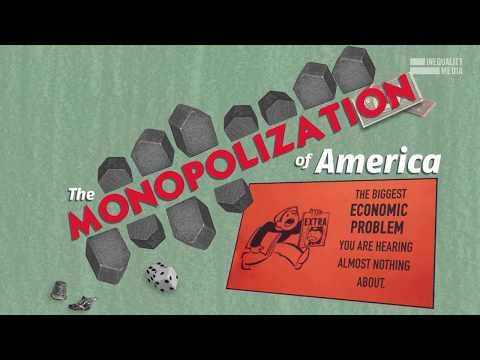
THE MONOPOLIZATION OF AMERICA: The Biggest Economic Problem You’re Hearing Almost Nothing About
Not long ago I visited some farmers in Missouri whose profits are disappearing. Why? Monsanto alone owns the key genetic traits to more than 90 percent of the soybeans planted by farmers in the United...robertreich.org
I agree that we should enforce our laws. If that's what Kamala Harris is talking about then I'm on board, even though I don't think it's a huge problem in the food industry.
Your article you posted didn't have any evidence for what you shared before about record profits for coke and pepsi and alluding to them working together to screw over the consumer. There is one guy saying that coke had record profits without sharing any details or facts to back it up. In fact the article kind of goes through how the market works and corrects itself out, which is what I believe in.
One of the main points, where I can see an issue is on price stickiness, where the price increases due to costs and then stays high even when costs go down. What people don't see is there is price stickiness the other way. When costs go up, companies can't typically pass those along to the consumers immediately, and so their margins are temporarily eroded until the costs go back down or they are forced to increase prices.
I actually do have a friend who works for Pepsi, and would have access to their P&Ls. She obviously can't share with me anything proprietary, but I can at least get her perspective. From the companies that I have seen their P&L, I can share that costs went up as much or more than prices, and so far haven't come down much. Maybe there is a little stickiness right now due to costs going down some without prices going down, but in the end we are just getting back to the margins pre costs increase.
I didn't find the article from Robert Reich very compelling. He didn't really provide any evidence on why having multiple large companies in a category is bad for the consumer. Theoretically having multiple large players in a category is the best case scenario for the consumer because as long as they are being competitive the larger companies have the best opportunity to reduce costs and leverage volume to give the most competitive costs. Typically large companies are large companies because they have grown due to giving the most competitive offering/pricing in their category.