In 1996, a 28-year-old man walked into a cafe in Port Arthur, Australia, ate lunch, pulled a semi-automatic rifle out of his bag, and opened fire on the crowd, killing 35 people and wounding 23 more. It was the worst mass shooting in Australia's history.
Australian lawmakers responded with new legislation that, among other provisions, banned certain types of firearms, such as automatic and semi-automatic rifles and shotguns. The Australian government confiscated 650,000 of these guns through a gun buyback program, in which it purchased firearms from gun owners. It established a registry of all guns owned in the country and required a permit for all new firearm purchases. (This is much further than bills typically proposed in the US, which almost never make a serious attempt to immediately reduce the number of guns in the country.)
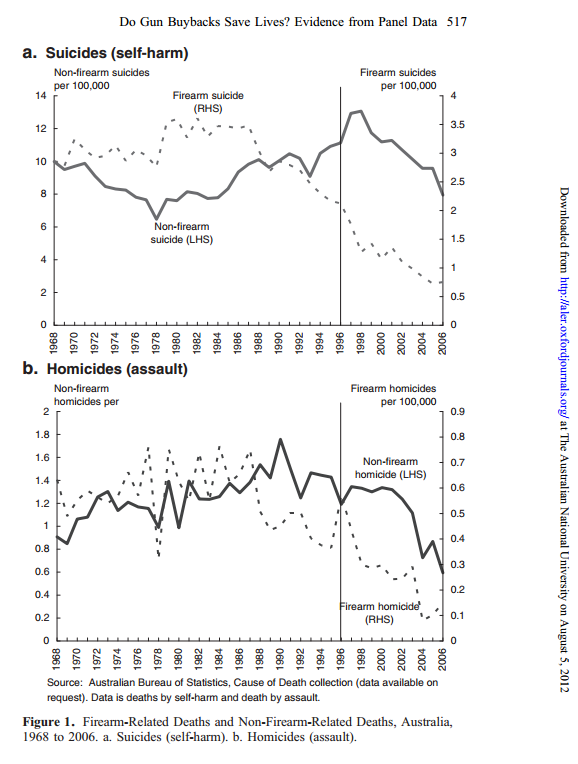
The result: Australia's firearm homicide rate dropped by about 42 percent in the seven years after the law passed, and its firearm suicide rate fell by 57 percent, according to one review of the evidence by Harvard researchers.
Now, it's difficult to know for sure how much of the drop in homicides and suicides was caused specifically by the gun buyback program. Australia's gun deaths, for one, were already declining before the law passed. But Harvard's David Hemenway and Mary Vriniotis argue that the gun buyback program very likely played a role: "First, the drop in firearm deaths was largest among the type of firearms most affected by the buyback. Second, firearm deaths in states with higher buyback rates per capita fell proportionately more than in states with lower buyback rates."
One study of the program, by Australian researchers, found that buying back 3,500 guns per 100,000 people correlated with up to a 50 percent drop in firearm homicides, and a 74 percent drop in gun suicides. As Vox's Dylan Matthews noted, the drop in homicides wasn't statistically significant. But the drop in suicides most definitely was — and the results are striking.
One other fact, noted by Hemenway and Vriniotis in 2011: "While 13 gun massacres (the killing of 4 or more people at one time) occurred in Australia in the 18 years before the [Australia gun control law], resulting in more than one hundred deaths, in the 14 following years (and up to the present), there were no gun massacres."


/cdn0.vox-cdn.com/uploads/chorus_asset/file/4124128/firearm%20suicides%20australia.jpg)