

Guys, guys, 30 years of studies is now anecdotal evidence.
What a world we live in.
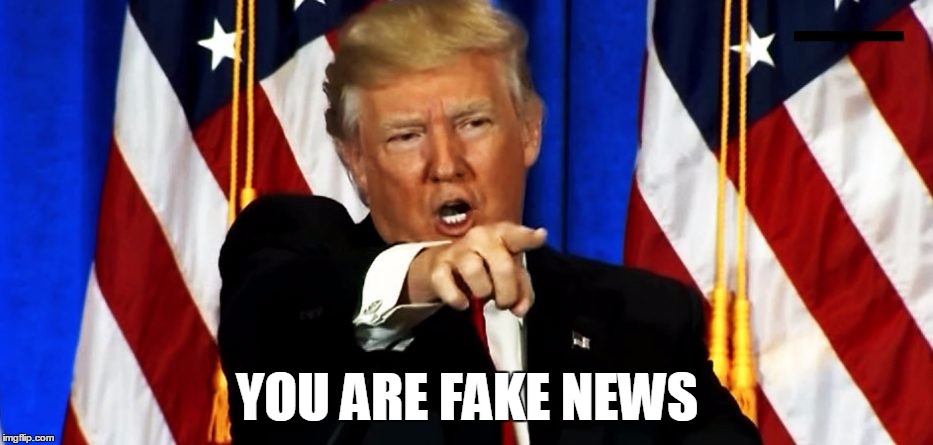
Guys, guys, 30 years of studies is now anecdotal evidence.
What a world we live in.

Here's a big problem I have with the world right now:
into the fray of an important debate rushes an ignoramus who flattens one side's opinion so profoundly that all heretofore productive directions are lost. For example, Trump and his (nationalist) anti-globalization arguments. Anti-globalization debates used to define one pillar of progressive thought -- and now plenty of people seem almost wistful at the idea of returning to a sober leadership guiding us along the same globalization pathways of the last 30 years. It seems like because Trump and his cronies are pounding the anti-globalization claims, plenty of people seem satisfied that anti-globalization arguments are wrong.
Eenie-Meanie is Trump here.
And count me amongst those who are deeply suspicious that spraying Round-Up all over the ground + what we consume ain't no thang.
For over a generation we were told that plastics were just fine for any of our consumables. For over a generation we were told that Industrial Forestry techniques were the best way (or, at least the most realistic) to manage forests. Examples of this type are legion.
As for the GE-GMO-'natural' debate: again, there are plenty of dumb asses out there who fall for some romantic notion of a 'wild' or 'natural' crop, but don't let them define the axis of the debate.

Please summarize the findings of your study showing that the GMO corn NK 603 was not substantially equivalent to a non-GMO corn.
Dr. Michael Antoniou: We used a modern in-depth compositional analysis to test the claim that a genetically engineered corn variety, NK603, was substantially equivalent to an isogenic non-GMO counterpart.
The establishment of substantial equivalence is a foundation for safety evaluation of GMO crops. In the United States and in other countries, the crops that have been commercialized are claimed to be substantially equivalent to non-GMO equivalents, and therefore safe.
But the kind of compositional analyses done thus far to see if a GMO crop is substantially equivalent is a crude nutritional analysis of total protein, fats, and vitamins.
If you use cutting-edge molecular profiling methods as we did, they will provide a spectrum of different types of proteins and small molecule metabolites. It’s a very in-depth analysis.
Does the claim of substantial equivalence stand up to this fine compositional analysis? No, it doesn’t. Our analysis found over 150 different proteins whose levels were different between the GMO NK603 and its non-GMO counterpart. More than 50 small molecule metabolites were also significantly different in their amounts.
What about the criticisms from supporters of GMO crops?
Dr. Antoniou: There have been vociferous attacks, and we have dealt with them in a rational, evidence-based way. We have posted four extensive rebuttals.
For example, critics said we had to compare the GMO corn with many other non-GMO varieties to see the range of “natural variation.” But comparing with more varieties has the effect of hiding the differences—the exact opposite of what we were trying to do.
Our aim was to analyze to see any effect of the GM transformation process, so the only scientifically valid comparator is the nearest possible isogenic non-GMO counterpart. When you do that, you find differences.
Wait a daggum minute. You tellin me selective harvestin of pine trees is worse then forest fires that pump out tons of pollution an cause asma?

Just helping a Russian out.
*asthma
*dag gum
The rest is grammatically correct, your welcome.

Let's spray something inimical to life all over a vital, life-giving substrate. And, since certain data (notably lacking any kind of long-term results from these novel encounters) shows no problems for humans, let's call it All Good. Eh?
Let's spray something inimical to life all over a vital, life-giving substrate. And, since certain data (notably lacking any kind of long-term results from these novel encounters) shows no problems for humans, let's call it All Good. Eh?

Chronic toxicity was a different story, however. Glyphosate has a lower chronic toxicity than 90% of all herbicides in this analysis, but it falls much further from the median chronic toxicity value compared with acute toxicity (Fig. 2). In the last year of survey data for each crop, glyphosate made up 26% of maize, 43% of soybean, and 45% of cotton area-treatments, but only contributed 0.1%, 0.3% and 3.5% of the total chronic hazard quotients in those crops, respectively. So although the chronic hazard quotient increased in 2 of 3 glyphosate-resistant crops, if glyphosate were not used the chronic hazard quotient would almost certainly be even greater since other herbicides with greater chronic toxicity would have been used instead.

There are studies out there on both sides, and both sides have some motivation to proceed the way they do.
I found this article (Dr. Michael Antoniou), and there are two links to their studies. I am curious what you think about this [MENTION=3073]JustTheTip[/MENTION].
The first quote, does this sound right that the GMO backed studies have not gone deep enough? The corn analysis study link goes more into this.
The second quote, does his answer to the GMO backed criticism of his study answer the criticism? I think the corn analysis study link also goes more into this topic.
I would like your insight into this as well as to see if his approach and practices were sound. TIA
Finally, will you look at the links to the 2 studies
http://non-gmoreport.com/articles/scientists-ground-breaking-research-uncovers-new-risks-gmos-glyphosate/
also-
Study links -
http://www.nature.com/articles/srep39328 Liver Toxicity - Roundup causality
http://www.nature.com/articles/srep37855 Corn analysis - NK603 GM maize v isogenic maize kernels