
You are using an out of date browser. It may not display this or other websites correctly.
You should upgrade or use an alternative browser.
You should upgrade or use an alternative browser.
Paul George Rumors
- Thread starter The Fresh Prince
- Start date


Thee Jazz Fan
Well-Known Member
Don’t be an idiot we ain’t keeping 5 without sacrificing LauriIf we end up getting the 3rd and 5th, I'm taking VJ and Ace
Collier
VJ
Ace
Lauri
Walker

Basketball Novice
Well-Known Member
Return on Investment (ROI) is a metric used to evaluate the efficiency or profitability of an investment. It measures the amount of return (gain or loss) relative to the cost of the investment.
Tanking is akin to a financial investment. However, rather than paying with money in exchange for an expectation of future financial returns, NBA franchises pay with losses in exchange for an expectation of future wins. In any financial investment, a minimum acceptable return is to break even, i.e., earn at least as much back as was invested, although few investors go into it hoping to break even, and most would consider this an unacceptable return.
Applying this straightforward concept to NBA tanking, and if we define the ROI as the number of consecutive postseason appearances relative to the number of non-postseason appearances, the minimum expected return on the tanking investment would be a postseason run lasting at least as many consecutive years as the number of consecutive losing years during the tank.
By this standard, IF the Jazz tank (i.e., number of years missing the postseason) stretches to 6 years (which strikes me as a plausible outcome given that most here seem to prefer continuing speculating in the draft rather than pivoting toward contention anytime soon), a minimum expected ROI is 6 years of consecutive playoff appearances. But, this is just the minimum, break even return and does not factor in how deep the Jazz go in the playoffs. If the expectation is 6 consecutive years of Round 2 or better playoff runs, this imposes stricter requirements on what the tank needs to deliver to be considered a successful return on investment.
Once we've identified the expected ROI, the next step is to calculate the likelihood that we'll achieve it. Note that the longer the tank (and losing) persist, the lower the likelihood that the tank delivers a positive ROI.
Perhaps you have a different ROI, and for you, winning the title itself is sufficient ROI regardless how many playoff runs the tank produces or how deep they go. But, even then, you still need to assess the likelihood of achieving this outcome (here's a hint: very low) to determine the expected ROI.
I've yet to see anyone here discuss tanking in the context of ROI. Many are willing to make a large investment in losing but never articulate what would be either an expected or minimum acceptable return, except in the very vaguest of terms.
I sure hope that the Jazz FO isn't this lazy or careless with how it thinks about the costs and benefits of tanking. Sadly, I don't see indications that it seriously factored in ROI considerations (costs, expected outcomes, and the likelihoods of expected outcomes) in its hell-bent-for-leather betting it all on the random drawing of pingpong balls "strategy." The Ainge Jr. regime seems to portend a change in strategy that may be more systematic in considering such things. Let's hope so.
Structuring the Utah Jazz process to be like a financial institute might not be the best way to go about this. It might be more structured but financial institutes can be fantastically wrong with their results despite all of the processes above you mentioned. We all know about the multiple market crashes that have happened throughout US History due to funny money stuff Wall Street has done.

fishonjazz
Well-Known Member
Contributor
2018 Award Winner
2019 Award Winner
20-21 Award Winner
2022 Award Winner
2023 Award Winner
2024 Award Winner
2025 Award Winner
How would our fan base have tolerated the fifth seed Pacers this year before the playoffs? Or the 2023-2024 mid-season Celtics?
Quite well I bet. Did those teams have any way of improving their roster going forward? Did they have any draft picks coming up? Were they in salary cap hell? Were their best players enemies with each other? It seems like you are basically asking how are fan base would tolerate a good but not great team (like those two teams you mentioned at those times). Well, that has basically been the jazz franchise for about 90% of its existence and we seemed to sell out the arena during almost all of the stockton/malone years (most of which was a good but not great team), the Dwill/boozer/ak/memo years (most of which was a good but not great team) and the Mitchell/gobert/hayward years (good but not great).
Historically our fan base has not only tolerated good but not great teams but actually loved them.
Also, only speaking for myself, I was tolerating the jazz quite well right up until the team got blown up. I absolutely love winning regular season games and going to the playoffs.
Sent from my OPD2203 using Tapatalk
Last edited:
Hedda Gambler
Well-Known Member
I`m not sure if I am able to follow your line of reasoning, but the plan should be and probably to keep looking for that special player until they get him. Not everything can be put in a spreadsheet and come to fruition and sometimes you need quite a bit of luck to get where you want. We hit it big with Rudy and Donovan and I am sure the front office is doing everything they can to get us back into a position like that as soon as possible. When that will be I have now idea, but I am sure everything is on the table. If next season is another tanking one, depends on what happens over the next few weeks. The Ainge`s probably talk to anyone and I would not be surprised if they are talking about everything from getting more picks to moving our #5 pic this year for a player they think gets us back as relevant, for example Jaylen Brown.They were back in the conference semis after four losing seasons with a single top 10 pick, Dante Exum, who was not a factor in returning to the playoffs. We're now heading into the fourth losing season since we were last in the playoffs, and everyone here seems to be more interested in trading away talent and accumulating draft picks year after year with an indefinite timeline for returning to contention than they are in actually returning to contention. The losing could easily stretch to 6 years under this scenario. That requires a lot of winning post-tank to earn an acceptable ROI on the losing investment. The post Al Jefferson era is not a good model for what is going on now.
What's the plan if we don't find that one special player this draft, or the next draft, or the next draft? What's the cutoff point where we stop pining our hopes on the lottery and actually start being proactive building a winning team via other means?
Assuming we do find that one special player this year or next, how long till we return to contention when our roster is fully stocked with rookie contracts or sub-optimal talent because we traded all the good talent away while crossing our fingers to get lucky in the lottery? Even with Wemby, the Spurs are two years in without a single playoff appearance and six years of losing to show for it. (With Wemby, they were heading for the play in last year.)
What's the minimum ROI you expect for 6 years or more of losing?
homeytennis
Well-Known Member
That team wins 10 games tops for the season. We get to keep our pick.Bailey and Fears easy answer boy
PG - Fears
SG - Keyonte
SF - Bailey
PF - Hendricks
C - Kessler

The Jazz Wonderbra
Well-Known Member
The Jazz Wonderbra
Well-Known Member
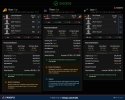
How's about this trade? We fix the Suns locker room while saving them gobs of cash.
We get 3 picks... 2 for Lauri and 1 for taking on Paul Georges contract.
The Sixers get an upgrade on a much better contract for 3 picks.
We get 3 picks... 2 for Lauri and 1 for taking on Paul Georges contract.
The Sixers get an upgrade on a much better contract for 3 picks.
fishonjazz
Well-Known Member
Contributor
2018 Award Winner
2019 Award Winner
20-21 Award Winner
2022 Award Winner
2023 Award Winner
2024 Award Winner
2025 Award Winner
Hells ya.How's about this trade? We fix the Suns locker room while saving them gobs of cash.
We get 3 picks... 2 for Lauri and 1 for taking on Paul Georges contract.
The Sixers get an upgrade on a much better contract for 3 picks.

You talk like you know your stuff and then you use ROI instead of ROA in this type of analogy.Return on Investment (ROI) is a metric used to evaluate the efficiency or profitability of an investment. It measures the amount of return (gain or loss) relative to the cost of the investment.
Tanking is akin to a financial investment. However, rather than paying with money in exchange for an expectation of future financial returns, NBA franchises pay with losses in exchange for an expectation of future wins. In any financial investment, a minimum acceptable return is to break even, i.e., earn at least as much back as was invested, although few investors go into it hoping to break even, and most would consider this an unacceptable return.
Applying this straightforward concept to NBA tanking, and if we define the ROI as the number of consecutive postseason appearances relative to the number of non-postseason appearances, the minimum expected return on the tanking investment would be a postseason run lasting at least as many consecutive years as the number of consecutive losing years during the tank.
By this standard, IF the Jazz tank (i.e., number of years missing the postseason) stretches to 6 years (which strikes me as a plausible outcome given that most here seem to prefer continuing speculating in the draft rather than pivoting toward contention anytime soon), a minimum expected ROI is 6 years of consecutive playoff appearances. But, this is just the minimum, break even return and does not factor in how deep the Jazz go in the playoffs. If the expectation is 6 consecutive years of Round 2 or better playoff runs, this imposes stricter requirements on what the tank needs to deliver to be considered a successful return on investment.
Once we've identified the expected ROI, the next step is to calculate the likelihood that we'll achieve it. Note that the longer the tank (and losing) persist, the lower the likelihood that the tank delivers a positive ROI.
Perhaps you have a different ROI, and for you, winning the title itself is sufficient ROI regardless how many playoff runs the tank produces or how deep they go. But, even then, you still need to assess the likelihood of achieving this outcome (here's a hint: very low) to determine the expected ROI.
I've yet to see anyone here discuss tanking in the context of ROI. Many are willing to make a large investment in losing but never articulate what would be either an expected or minimum acceptable return, except in the very vaguest of terms.
I sure hope that the Jazz FO isn't this lazy or careless with how it thinks about the costs and benefits of tanking. Sadly, I don't see indications that it seriously factored in ROI considerations (costs, expected outcomes, and the likelihoods of expected outcomes) in its hell-bent-for-leather betting it all on the random drawing of pingpong balls "strategy." The Ainge Jr. regime seems to portend a change in strategy that may be more systematic in considering such things. Let's hope so.
:facepalm:

YoungJefe
Well-Known Member
Stick to being a bra son, no way PHX is taking Lauri and 2nds for KD lolHow's about this trade? We fix the Suns locker room while saving them gobs of cash.
We get 3 picks... 2 for Lauri and 1 for taking on Paul Georges contract.
The Sixers get an upgrade on a much better contract for 3 picks.

Park Bites
Well-Known Member
I dont hate it