What's new

The *OFFICIAL* Russia Is About To Invade Ukraine Thread

It has a range of 150-226 miles. To me 90 miles is a compromise. I think a 70 mile range vehicle makes even more sense.
You have to remember that range is an estimate. My car gets substantially less range when it is really cold and really warm. It also changes depending on how you drive it. A guy at work here got a Mini cooper electric. It stated something like 120 miles range but in real-world driving he said he is getting anywhere from 80 to 110. So if you are looking for 70 miles consistently you probably need to have one that is rated at say 100 miles total range to account for variability in the vehicle, climate, and driver to ensure you get that 70 mile range out of it.


OK, this is the translation I got:


18+ One of the insiders from the special services of the Russian Federation, I will publish without edits and censorship, because it's hell: "I'll be honest: I almost haven't slept all these days, almost all the time at work, it floats a little in my head like in a fog. And from overwork, sometimes I already catch a state, as if it's not all real.
.....


Thank you so much, Red!
 
  • Like
Reactions: Red
There is not enough copper within a mile of the earth's surface to power (via electric motors) the number of cars we have in this world.. that includes mining the seafloor.

Solar power requires conversion, storage, transmission, charging, and discharging. The theoretical efficiency is no better than 80% per step, or about 33%. The energy is lost mostly to heat, so an equivalent in terms of world weather or atmospheric heat, but the conversion of vast tracts of land to solar power "farms" is an ecological or environmental travesty. Solar panels have a shelf life, or "half-life" if you will, of about 15 years. The silver, copper, or other metals will be reccycled, probably along with glass or plastic parts, but the cost of the panels has to be "amortized" in any estimation of cost. It will never beat nuclear. Even carbon fuels, with combustion engines, will always actually be cheaper, even if we're harvesting annual grass and doing pyrolysis to make the gas.

Societies that go insane will generally not do very well.

With governments in bed with business interests, creating new markets and favoring cartel interests, the people will get pretty poor, and have little access to resources, and almost no opportunity for prosperity.

The idea of solar power does have merit if we mount the panels on our home or business roofs. Helps with cooling and heating marginally, helps roofs last longer,well except tile roofs what the hell. The transmission costs are minimal. The environmental equation is better. Little birdies can nest in the works.

Craziness in the political agenda just oughtta make anyone ashamed to be on board with it. Whatever grows, anywhere on the earth surface, even the sea surface, converts CO2 to oxygen and carbohydrates (or, more precisely, reduced carbon compounds). All that carbon will, if we never touch it, one day be returned to CO2. We might as well use it. We gain nothing from carbon credits or other fake economics. We gain nothing worldwide by having different allowances on carbon. It's a global thing.

One good way to use carbon fuels is to use the hydrogen "blue gas" technology. So we have a lot of reduced elemental carbon. So we make graphite or other fiber, maybe even plastic. Some plastics have basically mostly carbonate composition. The hydrogen can be stored under pressure in tanks with some metals inside that enhance the amount of hydrogen held at a given pressure. Then you burn the hydrogen, emitting only water, and you get almost all the energy from the fuel converted to mechanical. The weight of the storage tanks in transit is a subtraction from efficiency, but the use of lighter structural materials is something we are already getting good at.

We should never let corrupt politicians make our business decisions.
 
We got scared by Chernobyl and 3 Mile Island - even tho Chernobyl was 40+ year old Soviet tech now (a quick google doesn't show when that reactor was completed, but #1 was completed in 1977 and the accident was in 1986, this was reactor #4) and 3 Mile Island was a resounding success, in that it was completely contained.

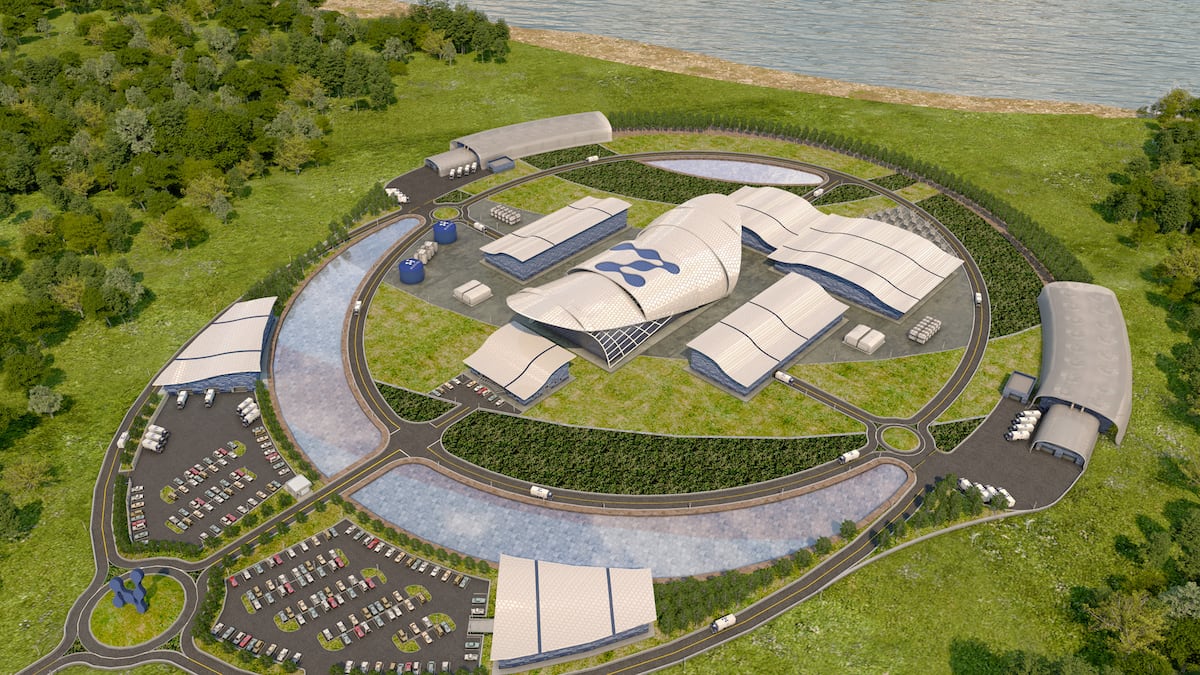
But, yes, the future is (or should be) nuclear and solar. There's a company here in Oregon, NuScale, developing micro-reactors, enough to power just a few square miles, that they would place around a city. If there's a problem with a reactor, it would automatically drop into a lead vault and sealed.


Funnily enough I want a lead lined crypt.
 
In many parts of the world, including 49 of the 50 US states, the power could come from solar arrays.
Unless the weather inclement. We had a freeze down here in South Texas and people died because we were relying on solar and wind. The point is you cannot rely on them.
 
If presidents could solely control the cost of gas and energy, every president would strive to make everything as cheap as possible to get votes. The real world doesn't work that way.

Supply and demand - cut Russia off, increases global demand. The rich get richer.

Yet another reason that if you want to get away from gas, we need to move faster and execute even better with electric cars by giving them longer range and making them more affordable.

It seems like people are ignoring that gas had risen a fair amount, and was still rising, before the issues with Russia happened.

It is, in my opinion, frustrating that we have options at home that could have helped with the supply issues far before this ever happened, but they were shut down. If you want to pay more to shut down Russia, why not pay for oil that comes from here, where we can create jobs, and business? But to act like all of this is happening because of Russia, well, there’s a fair amount of gaslighting going on there. Fuel was on the rise before this ever started with Russia.

In regards to electric, I’m glad it’s an option for some, and hope they continue to develop it. I don’t see any way in my lifetime that it develops enough to eliminate oil/fuel based vehicles. It simply isn’t feasible for anything that needs power and distance, i.e, semis, tractors, any kind of heavy equipment. Just for a personal example, it wouldn’t be very efficient to have a tractor shut down for a few hours while it needs to recharge when I’m very limited on time anyways. And as far as I know, there’s nothing that would create 500+ hp and last more than a few hours. That just ain’t gonna work. For commuters and city people it’s fine, for those of us who still have to travel long distances to get places, and deal with weather + mountain passes, not super realistic.
 
It seems like people are ignoring that gas had risen a fair amount, and was still rising, before the issues with Russia happened.

It is, in my opinion, frustrating that we have options at home that could have helped with the supply issues far before this ever happened, but they were shut down. If you want to pay more to shut down Russia, why not pay for oil that comes from here, where we can create jobs, and business? But to act like all of this is happening because of Russia, well, there’s a fair amount of gaslighting going on there. Fuel was on the rise before this ever started with Russia.

In regards to electric, I’m glad it’s an option for some, and hope they continue to develop it. I don’t see any way in my lifetime that it develops enough to eliminate oil/fuel based vehicles. It simply isn’t feasible for anything that needs power and distance, i.e, semis, tractors, any kind of heavy equipment. Just for a personal example, it wouldn’t be very efficient to have a tractor shut down for a few hours while it needs to recharge when I’m very limited on time anyways. And as far as I know, there’s nothing that would create 500+ hp and last more than a few hours. That just ain’t gonna work. For commuters and city people it’s fine, for those of us who still have to travel long distances to get places, and deal with weather + mountain passes, not super realistic.
No oil production was shut down...
 
Unless the weather inclement.
The cars run on batteries. You'd need complete cloud cover over a substantial period to drain the home battery completely.

We had a freeze down here in South Texas and people died because we were relying on solar and wind.
That's a lie (probably not yours, but a lie still). People died because the fossil fuel infrastructures was poorly maintained, and gas wasn't flowing. Wind/solar suffered much less than fossil fuels in that freeze.

The point is you cannot rely on them.
Relying on gas/oil is even worse.
 
What are these avenues?
While they Keystone probably wouldn’t have been completed by now, it would more than replicate what we were buying from Russia. To deny the oil from a close neighbor so we can buy it from Putin is nothing less than foolish. So that’s an avenue that while not completed, also isn’t any closer to completion than it should be.

There are also a lot of leases that could be available. But you don’t get to just sign up for a lease and drill oil the next day. Companies have assumed (and probably rightly) that an administration that has so far been opposed to fossil fuels would be very likely to quickly, easily, or cheaply, approve of the leases. That all costs money. Why spend money when it isn’t advantageous? Those would be my main points.
 
Back
Top