What's new

Back Issues

I have degenerative disc disease plus steel rods in my back from a fall when I was 23. I got a epidural steroid injection in my back yesterday. Hurt a little more than I thought it would. Woke up this morning with no pain. It’s been months since I’ve gotten up with no pain. Knock on wood that the pain continues to stay away. It’s awful to live with pain every minute of the day.
 
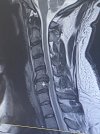
Not my back, but I have a “severely ruptured” C5/C6 disk that is causing “severe stenosis of the spinal column” and pinching the nerve that feeds my left shoulder and arm. I’m ****ing miserable.
The surgeon I was referred to said it’s non urgent and wanted to schedule my first appointment a month out. I basically told them to **** off. I found a doctor that fixes these things non surgically, but the insurance doesn’t cover it. I did the whole appeal thing. They hired an “outside source” to review it. They hired a ****ing neurosurgeon. Surprise, surprise the surgeon said the non surgical treatment is a no go. Now I’m appealing to the state insurance commission to see if they’ll approve it so my insurance will have to cover it. I really really don’t want to do the surgery and have vertebrae fused together in my neck.
Aside from whatever modality not being covered by the insurance, another large barrier will be insurance not covering chiropractic care and/or tests/procedures ordered by a chiropractor. If you find yourself looking for more non-surgical options, you can search out a PM&R physician (MD or DO) who practice physical medicine (meaning musculoskeletal) but aren't surgeons. I don't know what non-surgical options would or would not be available, but they'd be covered by insurance and (typically) their recommendations. PM&R can be pretty broad, so finding someone who does more spine.
 

If it really worked, insurance would jump all over it, because it would save them thousands of dollars. Health insurance companies always prefer the cheapest solution.
This used to be a belief I held on a simple litmus test of what works and what doesn't by appealing to those most financially incentivized to scrutinize the information the most effectively. Unfortunately, the connection between efficacy, cost-effectiveness, and insurance funding is tenuous, at best. Insurance companies certainly have policies in place that make them money, but there are massive holes where this is wrong if we're left to assume that insurance decisions tightly intertwine with effectiveness. Too often I have had to do prior authorizations or peer-reviews with the insurance company and waste a lot of my time to get them to approve something that's actually in their best interest (to the tune of thousands of dollars). They can create algorithms that overall are net positive for their bottom line, but imbedded within that is a lot of other waste because the calculations become too complex and can't account for second and third order thinking. One example is having to spend 45 minutes on the phone to get a medication approved that's on the Walmart $4 list where the risk of not taking it is the insurance company shelling out $2k/day for rehospitalization. Or an insurance company not funding 2-3 more days in the hospital to tie up loose ends and instead discharge the patient, only for them to be re-hospitalized for 10 days. They hire physicians to do the "peer-review," but their role is not to actually think like a physician. They are just given the insurance company's criteria for _______ with no wiggle room. So it isn't really a "peer-review," it's a review of insurance criteria (set by who knows) that someone making minimum wage could do, but they have a physician do the review because they can indirectly give the impression that a physician signed off on that, when the physician isn't rendering their opinion about the case at all, just about whether the case fits the company's criteria. I will have them admit that they know it's going to be more costly to the insurance company on the back-end when the patient is re-admitted, but there's nothing in the insurance company's guidelines that allows their physician to help protect themselves from their own horrible policies. On the flip side, there are so many practices and interventions in medicine that are paid for by insurance but have very questionable benefits (even if we’re just talking financially). Even more unfortunate, when they try to act on that, they end up screwing it up for the individuals who may actually be benefitting, but their criteria often can’t capture the right populations for the right interventions.

This isn't to make any claims about this specific case, just that using insurance as a rubric is much more flimsy than common sense would have us believe.

Promising research gets funded by the government.
This is similar to the above. It's a great idea in theory, but in reality this is not so neat and clean. There are plenty of flaws with this.
 
Last edited:
This isn't to make any claims about this specific case, just that using insurance as a rubric is much more flimsy than common sense would have us believe.


This is similar to the above. It's a great idea in theory, but in reality this is not so neat and clean. There are plenty of flaws with this.
I fully agree, and I should used somewhat more reserved language in these statements.
 
Aside from whatever modality not being covered by the insurance, another large barrier will be insurance not covering chiropractic care and/or tests/procedures ordered by a chiropractor. If you find yourself looking for more non-surgical options, you can search out a PM&R physician (MD or DO) who practice physical medicine (meaning musculoskeletal) but aren't surgeons. I don't know what non-surgical options would or would not be available, but they'd be covered by insurance and (typically) their recommendations. PM&R can be pretty broad, so finding someone who does more spine.
Also a neurologist may be able to point you in a particular direction.
 
Screenshot_20220909_170610.jpgScreenshot_20220909_170639.jpgSImmetry_anatomy__1_-782x1024 (1).png
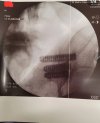
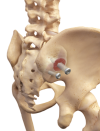
This is from my back and hip SI Fusion surgery from May. I was scared af going into it and getting a joint fused, but so happy I did cause it worked. The chronic pain I had in my back and hip for 10 years is pretty much gone. I'd say, it's 85% less painful now. The best surgery I've had from all 8 of my orthopedic surgeries. The only problem is now I have sciatic pain in my right butt cheek. So annoying.
 
View attachment 13033View attachment 13034View attachment 13035
This is from my back and hip SI Fusion surgery from May. I was scared af going into it and getting a joint fused, but so happy I did cause it worked. The chronic pain I had in my back and hip for 10 years is pretty much gone. I'd say, it's 85% less painful now. The best surgery I've had from all 8 of my orthopedic surgeries. The only problem is now I have sciatic pain in my right butt cheek. So annoying.
Woah!!!! What the hell happened to the rest of you?!!! You ligaments, tendons, muscles, and blood?
 
So anything elastic for underwear triggers pain for me…I thus have to wear old boxers whose elasticity has worn down after so many years.

Any idea why that would be? Is it doing something to my nerves? My hip bones?
 
I genuinely wonder how much of our back issues is because of poorly designed sofas and chairs.

Obviously some can be genetics or from accidents and it often arises because we just sit too damn much and we weren’t “born” to do that—we have been designed to be hunters and always be moving.

But I wonder how many of us would have these issues if our seating was just designed better. For instance, my ergonomic chair at work is great. It doesn’t cause me to tighten up the way most other seating does.
 
I genuinely wonder how much of our back issues is because of poorly designed sofas and chairs.

Obviously some can be genetics or from accidents and it often arises because we just sit too damn much and we weren’t “born” to do that—we have been designed to be hunters and always be moving.

But I wonder how many of us would have these issues if our seating was just designed better. For instance, my ergonomic chair at work is great. It doesn’t cause me to tighten up the way most other seating does.
This makes me wonder if those of us that have standing desks uses them enough, and for those that do use them heavily if it helps them out.

Anyone?
 
I had 2 herniated discs when i was 17 playing aussie rules. I feel the pain of everyone here, absolute nightmare of agony that took me about 5 years to be pain free without surgery. I got rashes due to the pain, almost in tears sitting in a car or the school bus. I hid it well and developed a decent pain threshold. And yes, wearing a belt or tight underwear etc made it worse for me also.

I consider myself lucky even though it forced me to stop playing sports during my prime. Went to many docs, physios, chiros who had me doing exercises, stretching all sorts of crap that didnt help. Finally after 2 years of that i found a neurosurgeon who put it to me straight. 2 years with a brace, multiple short walks each day increasing as time goes on, no bending down at all, anti inflammatory to help with pain. He also said i was too young for surgery. So rather than laying down all day he made me more active and it slowly worked. Once i was pain free i kept active with gym, walking and running but not pushing it. And by my mid-late 20's i was back playing basketball and i still play to this day, i'm 40 now and work an office job.

My hips and shoulders are still out of alignment due to the tension i had for so long caused by the pain. And on a few occasions i had done my back again where i was back in a world of hurt but i figured out it was all in my mind. I was so scared about my discs, my whole back tensed up which caused even more pain. I found this out when a doc tried me on a very small amount of Valium. It released the tension and my pain was gone in a day. So in reality i probably just did my back like every normal person does.

Its crazy how just a mm difference in a disc can mean a very different story. Just thought i would share :)
 
Back
Top