What's new

Kamala Harris for Pres

  • Thread starter Thread starter Deleted member 365
  • Start date Start date
You don't need a monopoly to create a scenario where prices can do this. You only need an oligopoly which is what we have. Through price leadership, a few big companies can "collude" without directly colluding to set prices as high as they can get away with.

This.


Sent from my CPH2451 using Tapatalk
 
To use a sports related metaphor, it sounds like some people think they would prefer sports leagues to only have 4 teams allowed to win the championship and then they would label that as a league with great parity. It's not just one team allowed to win, there are 4!

Sent from my CPH2451 using Tapatalk
 
Patents for pharmaceutical products, AKA life-saving drugs, are anti-consumer. If you develop a revolutionary new drug, you get the F2M advantage which is incentive enough. The idea that allowing companies to just charge as much as they want as long as their patent is in place is insane to me.

And AI-o-Meter is over here saying it's the same as seizing a whole damn factory.
Yes. It is exactly the same. Patents are a property. They can be sold. They can be licensed. They can be utilized to bring product to market. A new small-molecule pharmaceutical costs over a billion dollars in R&D, testing, and initial production set-up to bring to market. Your moral blather is no different from saying a billion dollar drug production facility, upon producing life-saving drugs, becomes the property of everyone. The land, the buildings, the equipment, all of it becomes open for anyone's use. If you did that, no one would ever build a life-saving drug production facility.

One of the single most important jobs of government, any government, is to enforce property rights.
 
To use a sports related metaphor, it sounds like some people think they would prefer sports leagues to only have 4 teams allowed to win the championship and then they would label that as a league with great parity. It's not just one team allowed to win, there are 4!

Sent from my CPH2451 using Tapatalk

I don't understand how how this metaphor is relevant? Could you please explain, because it sounds like you aren't really understanding what's going on.
 
Economy of scale is good for efficiency. Why not have one company just do everything then, and it'll be democratically controlled so they can't screw us over. We'll call it the US government.


Once again, an Oligopoly is more than enough to engage in anti-consumer, non-competitive price leadership. You think supply and demand are setting the prices in this scenario? If you wanted somebody to set the price would you rather have the government do it or the profit-motive?


Damn, that sucks for them bro. I'm not sure what it has to do with price-gouging. Sounds like they made bad business decisions and deserved to fail.

Do you know what a commodity is? It seems like people aren't quite grasping that part of this.
 
Our medical and healthcare industry will remain worse than the rest of the world.
Just checking, but you do know our "worse than the rest of the world" medical and healthcare industry invents nearly every new drug, medical device, and procedure used throughout the world, right?
 
Yes. It is exactly the same. Patents are a property. They can be sold. They can be licensed. They can be utilized to bring product to market. A new small-molecule pharmaceutical costs over a billion dollars in R&D, testing, and initial production set-up to bring to market. Your moral blather is no different from saying a billion dollar drug production facility, upon producing life-saving drugs, becomes the property of everyone. The land, the buildings, the equipment, all of it becomes open for anyone's use. If you did that, no one would ever build a life-saving drug production facility.

One of the single most important jobs of government, any government, is to enforce property rights.

Sure patents are considered to be an asset on the books and are given value. It's fairly obvious to me that a distinction can be made between that and the means to produce. Patents are only valuable inasmuch as they prevent others from producing the same.

Overall, I don't think they're good and we can do without them. This isn't a moral argument, it's an economic one. If companies can't produce and survive without patents to protect them, they don't deserve to exist. We can incentivize R&D investment through other means if necessary.
 
Overall, I don't think they're good and we can do without them. This isn't a moral argument, it's an economic one. If companies can't produce and survive without patents to protect them, they don't deserve to exist. We can incentivize R&D investment through other means if necessary.
Every industrialized country in the history of Earth has had a patent system, including Communist countries, because enforcement of intellectual property rights has proven absolutely essential to innovation and a functioning economy, even Marxist ones. Please enlighten us all on the detailed functioning of your better system than no one has ever thought to implement.

Also, "deserve" isn't an economic term. It is a term of moral judgement.
 
Last edited:
Forget for a second that you don't like how the information was provided and simply look at the information.
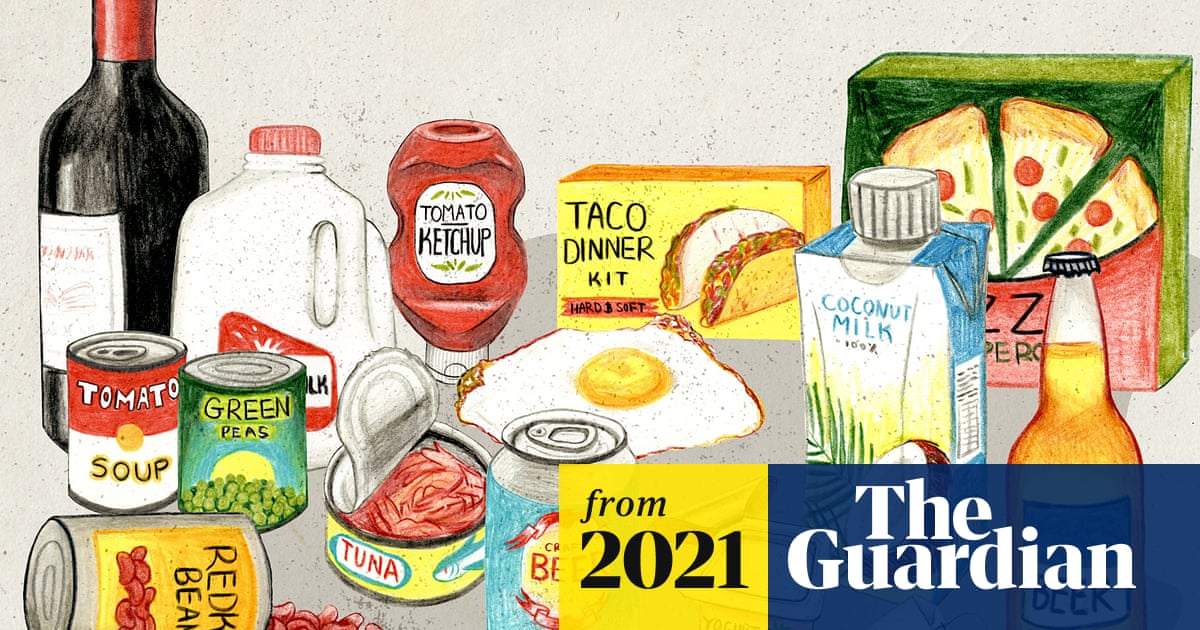
What are your opinions about it? Do you think it's good that a really small amount of companies control such a large amount of food? Do you think that makes it harder or easier for there to be competition for consumers to seek out? Do you think anyone should try to do anything about the lack of competition?

But here, I will provide a link and Even copy and paste from the link for ya.
Consumer choice is largely an illusion – despite supermarket shelves and fridges brimming with different brands.

In fact, a few powerful transnational companies dominate every link of the food supply chain: from seeds and fertilizers to slaughterhouses and supermarkets to cereals and beers.

The size, power and profits of these mega companies have expanded thanks to political lobbying and weak regulation which enabled a wave of unchecked mergers and acquisitions. This matters because the size and influence of these mega-companies enables them to largely dictate what America’s 2 million farmers grow and how much they are paid, as well as what consumers eat and how much our groceries cost.

“It’s a system designed to funnel money into the hands of corporate shareholders and executives while exploiting farmers and workers and deceiving consumers about choice, abundance and efficiency,” said Amanda Starbuck, policy analyst at Food & Water Watch.

For instance, PepsiCo controls 88% of the dip market, as it owns five of the most popular brands including Tostitos, Lay’s and Fritos. Ninety-three per cent of the sodas we drink are owned by just three companies. The same goes for 73% of the breakfast cereals we eat – despite the shelves stacked with different boxes.


So now that you have been provided the information in a different way is ok for you to post your thoughts?


Tons of great information in article.

I know trump wants to get rid of regulation. Getting rid of regulations is what enabled a wave of unchecked mergers and acquisitions and helped create these monopolies.

I wish someone was trying to do something about this issue.

Sent from my CPH2451 using Tapatalk

Ok, I read the article, and now I'm more confused why you would have shared it. The premise seems to be that we should support smaller food producers, but wouldn't that just increase how much you pay for food? It doesn't really say why large food companies are bad and small ones are good for consumers except that big must equal bad and small must equal good. Having worked for both small and large food companies I can tell you there are advantages and disadvantages to both.

I didn't see any proof of price gouging in that article, in fact that wasn't really the focus. The main point was that we should have more choices, which is fine. The article didn't really get in to the reasons why large companies acquire small ones, or how that can sometimes be beneficial. It didn't talk about how companies create competitive advantages to become large in the first place. There is almost an inference that being big means you made a deal with the devil.

The one relevant section was on commodity price stickiness. I guess that is a way that we end up paying more than we should, but it's only temporary.

The other part I agree with is the low wages, for workers in the food industry being a problem. I'm not sure the best way to address that, but know it will definitely increase the cost of food.

I do think a lot of the stats in the article seemed credible, but just the conclusion that the stats led them to were suspect, at least for me.
 
Last edited:
Do you know what a commodity is? It seems like people aren't quite grasping that part of this.

A little condescending, don't you think? Commodity markets aren't magically exempt from price shenanigans even if the econ101 textbook tells you they are. I'd say they are more resistant to it because of their fungibility and, of course, huge bargaining weight from buyers, something individual consumers don't have. Colloquially, people don't even use the economic definition of commodity anyways. It just means "stuff" to most people. Maybe you could try using "raw materials" or something like that.

It's beside the point since the main issue is on the consumer side. And yes, profit margins have gone up, unreasonably so in comparison to non-labor cost.

 
Every industrialized country in the history of Earth has had a patent system, including Communist countries, because enforcement of intellectual property rights has proven absolutely essential to innovation and a functioning economy, even Marxist ones. Please enlighten us all on the detailed functioning of your better system than no one has ever thought to implement.

Also, "deserve" isn't an economic term. It is a term of moral judgement.
Meh. I'm not concerned with your lack of imagination. The arguments against patents are many and compelling.

Thank you for the word choice policing. Feel free to use "aren't fit to survive" in place of of "deserve"
 
A little condescending, don't you think? Commodity markets aren't magically exempt from price shenanigans even if the econ101 textbook tells you they are. I'd say they are more resistant to it because of their fungibility and, of course, huge bargaining weight from buyers, something individual consumers don't have. Colloquially, people don't even use the economic definition of commodity anyways. It just means "stuff" to most people. Maybe you could try using "raw materials" or something like that.

It's beside the point since the main issue is on the consumer side. And yes, profit margins have gone up, unreasonably so in comparison to non-labor cost.


I apologize for coming off as condescending, your response to my post did not make sense to me with the understanding that commodities are based on supply and demand. The article you posted was not specific to the food industry, so I'm still looking for evidence that profit margins have risen dramatically in the food industry. I purposefully use the word dramatic because margins for the food industry are relatively low, so even if they rose a little, I wouldn't think that was a bad thing.
 
Back
Top