LOL. The mere fact that Europe is finally having a spike NOW shows that it can be controlled. We all knew that fall and winter Was going to cause the northern hemisphere issues. Europe is now figuring out how to best deal with cooler temperatures and loosened restrictions. The problem is you’re looking at a snapshot today when what we need to do is look at the entire film strip. We’re the only country that has consistently led the world in cases and deaths since April.
So yeah, things suck now in France and Germany. But it wasn’t that way a few months ago. And it most likely won’t be as bad a few months from now.
Leadership matters.
If spiking now shows that it can be controlled, and that lower rates was evidence of policy success, then the unspoken implication is that the spike now must be due to public policy failure. What other explanation is there, especially with the spike being so drastically higher than current US spike? Here's a good graph:
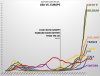
And another important caveat is to look at how well testing is or isn't entirely capturing this. Here are how many tests per 1 million population each of the countries above have run:
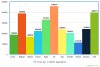
Czech Republic: 188,653
Belgium: 389,956
Holland: 169,238
France: 224,090
Spain: 331,544
UK: 458,231
Italy: 239,803
Sweden: 205,031
US: 398,679
And here are the ones that I mentioned previously that are not on this graph:
Germany: 243,003
Poland: 114,456
To visualize this, I put it into a graph to get a good idea of comparative testing rates. This isn't organized very well because I threw it together quick, but you get the idea:
But when you say "We all knew that fall and winter Was going to cause the northern hemisphere issues," I think it's important to clarify when. I had been saying way back in April, when taking a seasonality approach was completely dismissed because it played to a more optimistic side, but I had predicted that when the seasons swung and seasonality could be brought back under doom highlights, that people would welcome this interpretation:
[From April]
Well, that depends on when you’re asking. If it’s now, any standard answer will do, particularly if it’s as a result of America’s ineptitude in handling this. If you ask toward the end of the summer, my suspicion is that the idea of warmer climates and summer conditions suppressing the full wrath of the virus will really start to heat up by that point, even though we’re arguing against it currently. But I’ll post more on that later.
And then again in much more detail in May in
this post.
But to speak to all things seasonality regarding this, there's plenty of evidence regarding lower fatality rates over the summer, and delaying the spread of the infection for winter months could prove more deadly. This was also discussed by myself and candrew somewhere earlier in this thread. So time will tell here if Europe's lockdown and suppression of spread over the summer months was ultimately helpful, or if this delayed infection for later, more deadly, months, in addition to secondary health issues from lockdown and economic fallout.
If we backup to when this all started, nearly everyone in the world saw the article that former President Obama tweeted out that had live simulations of different containment strategies. The education that was pushed from this and then everyone globally understood was that the total number of infections would be relatively unchanged -- that we wouldn't be able to control that -- but that it was imperative that we did do what we could do, which was prevent the collapse of the medical system and prevent unnecessary
secondary deaths as a result of healthcare system collapse. That was the purpose. Everybody understood that at that time. So the issue we have before us has now pivoted and absolutely nobody can really put forth a cogent argument of what the actual end-game is. If you could theoretically hold this off until there was an (effective) vaccine, then that's one thing, but the amount of time until that's a reality is very questionable. So the question really becomes what natural barriers arise to get this to the point where the rate of new infections is stable (i.e. endemic, i.e. no longer a pandemic). If you think this will be eradicated, or if you think that concept is on the table with some kind of public policy intervention or leadership,
please Google the list of infectious diseases that have been eradicated. But I digress... if the total number of infections are going to be the same, does it make more sense to have those who get exposed to it first be those who are more healthy and less vulnerable, or do we take an approach where everyone avoids it, and therefore more evenly spread the infection across demographic age and health groups? Because to me, it makes more sense for community immunity to be built amongst the healthy, as this has a lower infection fatality rate for those under 65 than influenza does.
So I guess we will see if Europe's summer suppression was a good idea.